Larimar Stone: Meaning, Properties, Benefits, Uses, History, and Complete Buying Guide
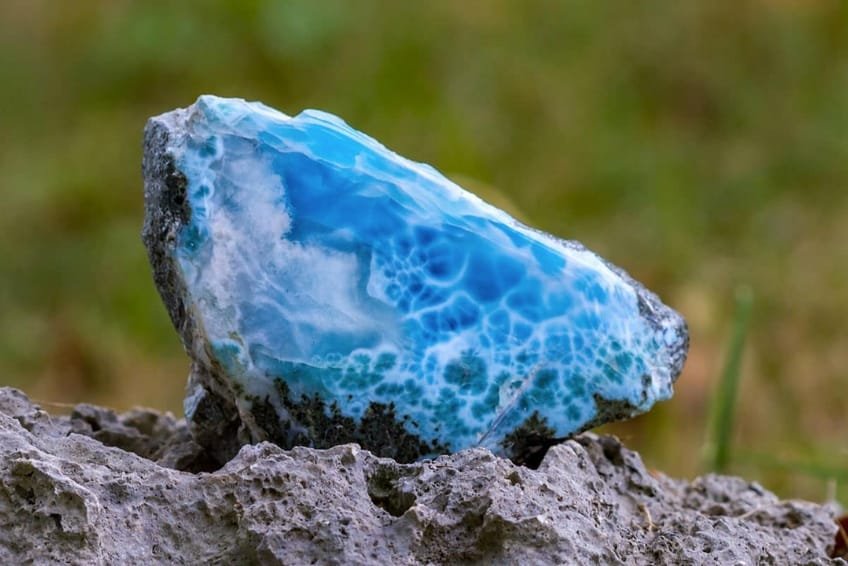
Larimar stone is one of the most beautiful and fascinating gemstones in the world. Known for its stunning blue, turquoise, white, and sometimes greenish patterns, Larimar is often admired for its resemblance to tropical Caribbean waters. This rare gemstone has gained popularity among jewelry lovers, collectors, crystal enthusiasts, and people who appreciate naturally formed stones.
Unlike many famous gemstones that are found in several countries, natural Larimar has a very limited geographic origin. It is primarily associated with the Dominican Republic in the Caribbean. Its distinctive appearance, rarity, and connection with the Caribbean make it a particularly interesting gemstone for collectors.
Larimar is also known by names such as Caribbean blue stone, Stefilia’s Stone, and Dominican blue stone. Scientifically, it is a blue variety of pectolite, a mineral composed mainly of calcium and sodium silicate. Its unusual blue color is related to copper incorporated into its mineral structure.
In this comprehensive guide, we will explore Larimar stone meaning, history, geological properties, colors, hardness, benefits, jewelry uses, identification methods, value, buying tips, cleaning methods, symbolism, and frequently asked questions.
What Is Larimar Stone?
Larimar is a rare blue variety of the mineral pectolite. Pectolite itself is not particularly rare, but the blue variety known as Larimar is unusual and highly sought after because of its attractive color and distinctive patterns.
The gemstone typically displays shades ranging from pale sky blue to deep blue, turquoise, blue-green, and white. Some specimens contain cloud-like or wave-like patterns that create an appearance similar to ocean water.
Larimar is formed through volcanic and hydrothermal geological processes. The gemstone is closely associated with volcanic rocks, and its formation occurred under specific geological conditions that allowed blue pectolite to develop.
One of the most important characteristics of Larimar is its geographic rarity. Commercially important Larimar deposits are associated with the Dominican Republic, making the gemstone strongly connected with Caribbean geology and culture.
Larimar Stone Meaning
The meaning of Larimar is often connected with tranquility, communication, serenity, and the beauty of the sea. Its soft blue color naturally reminds many people of calm ocean water and clear tropical skies.
In crystal and spiritual traditions, Larimar is sometimes described as a calming or soothing stone. People who enjoy crystals may use it as a symbolic reminder to remain peaceful, communicate clearly, and maintain emotional balance.
These spiritual meanings are cultural and traditional beliefs rather than scientifically established effects. Scientifically, Larimar is valued as a mineral specimen and gemstone because of its distinctive appearance, rarity, and geological characteristics.
Why Is Larimar Called the Caribbean Blue Stone?
Larimar is often called the Caribbean blue stone because of its beautiful blue and turquoise appearance and its connection with the Dominican Republic.
When polished, high-quality Larimar can display patterns that resemble ocean waves, clouds, tropical water, or sunlight reflecting on the sea. These natural visual characteristics have helped create its strong Caribbean identity.
For many jewelry enthusiasts, Larimar represents the relaxed atmosphere and natural beauty associated with the Caribbean.
History of Larimar
The modern history of Larimar is strongly connected with the Dominican Republic.
Although local people were aware of blue stones in the region, the gemstone became internationally recognized during the twentieth century. Deposits in the Barahona region eventually became the main commercial source of Larimar.
The name “Larimar” is generally attributed to Miguel Méndez, who combined the name of his daughter, Larissa, with the Spanish word “mar,” meaning sea.
The resulting name, Larimar, beautifully reflects the gemstone’s ocean-like appearance.
The gemstone eventually became an important part of Dominican jewelry and mineral collecting. Today, Larimar is recognized internationally as one of the Dominican Republic’s most distinctive natural gemstones.
Where Is Larimar Found?
The most famous Larimar deposits are located in the Dominican Republic, particularly in the Barahona Province.
The gemstone occurs in a relatively restricted geological environment. This limited availability contributes significantly to its rarity and value.
Mining Larimar can be challenging because deposits may occur in difficult mountainous terrain. Much of the extraction has traditionally involved small-scale mining methods.
Because natural Larimar is geographically restricted, genuine material from the Dominican Republic is particularly important to collectors and gemstone buyers.
Larimar Stone Color
Color is one of the most important characteristics of Larimar.
Common colors include:
- Pale blue
- Sky blue
- Turquoise blue
- Blue-green
- Deep blue
- White
- Grayish blue
The most desirable specimens often have attractive blue coloration combined with strong natural patterns.
Some Larimar pieces are mostly white with small areas of blue, while others have extensive blue or turquoise coloration.
The visual quality can vary considerably from one specimen to another, making each piece unique.
Larimar Patterns
One of the most attractive features of Larimar is its natural patterning.
Polished Larimar can show patterns resembling:
- Ocean waves
- Clouds
- Foam
- Tropical water
- Blue-and-white marble
- Sunlight reflections
These patterns are naturally formed within the stone and can vary dramatically.
Some pieces have broad blue areas, while others contain intricate web-like or cloud-like formations.
This natural variation means that two Larimar gemstones of similar size can look completely different.
Larimar Stone Hardness
Larimar has a Mohs hardness of approximately 4.5 to 5, depending on the material and measurement conditions.
This means Larimar is considerably softer than gemstones such as quartz, sapphire, and diamond.
Because of its moderate softness, Larimar should be handled carefully.
It can potentially be scratched by harder materials, so storing it separately from harder gemstones is recommended.
Its relatively modest hardness also means that Larimar jewelry should not be treated as indestructible.
Larimar Stone Transparency and Luster
Larimar is generally opaque to translucent rather than transparent.
When polished, it can develop an attractive smooth and sometimes silky or glass-like luster.
Its appearance depends heavily on the quality of the material, polishing technique, natural texture, and color distribution.
High-quality polished Larimar can have an exceptionally attractive surface, especially when its blue patterns are clearly visible.
Larimar Stone Formation
Larimar is a form of pectolite that formed under unusual geological conditions.
Its formation is associated with volcanic activity and hydrothermal processes. The interaction of mineral-rich fluids with volcanic rocks contributed to the formation of pectolite.
Copper is associated with the characteristic blue coloration of Larimar.
The exact geological conditions necessary to produce gem-quality blue pectolite are uncommon, which helps explain why Larimar is found in such a limited area.
Chemical Composition of Larimar
Larimar belongs to the pectolite mineral group.
Pectolite has a chemical composition based primarily on calcium, sodium, silicon, oxygen, and hydrogen. The distinctive blue coloration of Larimar is associated with copper.
Because natural gemstones can contain minor elements and variations, individual specimens may differ slightly in appearance and composition.
For serious collectors, professional mineral testing can provide more reliable identification than appearance alone.
Larimar Stone Benefits
Larimar is frequently associated with various traditional and spiritual benefits in the crystal community.
People who use Larimar symbolically may associate it with:
- Calmness
- Peace
- Relaxation
- Communication
- Self-expression
- Emotional balance
- Patience
- Confidence
- Inner reflection
It is important to distinguish these traditional beliefs from scientific evidence. There is no established scientific evidence that wearing or carrying Larimar produces medical or psychological treatments.
Nevertheless, gemstones can have personal and cultural meaning, and many people enjoy them as decorative objects, collectibles, or symbolic reminders.
Larimar and Emotional Well-Being
Because of its soothing blue appearance, Larimar is often symbolically connected with peaceful emotions.
Many people associate blue colors with calm oceans, clear skies, and quiet environments. For this reason, Larimar may be appreciated as a visual reminder of relaxation.
Some crystal enthusiasts keep Larimar in personal spaces, wear it as jewelry, or include it in meditation routines.
These practices are matters of personal belief and should not replace professional care when someone has a health concern.
Larimar and Communication
Larimar is sometimes associated with communication and self-expression in crystal traditions.
Its symbolism is often connected with speaking calmly, listening carefully, and expressing thoughts honestly.
For someone who enjoys the symbolic meaning of gemstones, Larimar can serve as a reminder to communicate thoughtfully and respectfully.
Larimar Jewelry
Larimar is widely used in jewelry because of its attractive color and natural patterns.
Common Larimar jewelry includes:
- Rings
- Necklaces
- Pendants
- Earrings
- Bracelets
- Cabochons
- Brooches
The stone is especially popular in cabochon jewelry because smooth polishing allows its natural patterns to become highly visible.
Larimar pendants are particularly common because larger pieces can display the gemstone’s beautiful blue-and-white patterns.
Larimar Rings
Larimar rings can be visually striking because the gemstone creates a colorful centerpiece.
However, because Larimar is softer than many traditional ring gemstones, it should be protected from hard impacts and scratches.
A Larimar ring may be better suited for occasional or careful wear rather than rough daily activities.
When choosing a Larimar ring, pay attention to the stone’s color, pattern, surface quality, and setting.
Larimar Necklaces and Pendants
Pendants are among the most popular ways to wear Larimar.
A pendant can showcase a relatively large section of Larimar without exposing the stone to as much impact as a ring might experience.
Large Larimar cabochons can display beautiful ocean-like patterns, making them especially attractive as statement jewelry.
Larimar Earrings
Larimar earrings are another elegant option.
Because earrings generally experience less physical contact than rings, they can be a practical way to enjoy Larimar while reducing the risk of scratching.
Small polished Larimar stones are commonly used in simple earrings, while larger pieces can create a more dramatic appearance.
Larimar Bracelets
Larimar bracelets can be made using polished beads, cabochons, or carved pieces.
Since bracelets can come into contact with desks, furniture, clothing, and other objects, extra care is recommended.
Avoid wearing Larimar bracelets during activities where the stone could be struck or scratched.
Larimar Cabochons
Cabochons are especially popular among Larimar collectors and jewelry makers.
A cabochon is a gemstone that has been shaped and polished rather than faceted.
This style works well for Larimar because its beauty comes largely from color and natural patterning rather than optical sparkle.
A well-polished Larimar cabochon can reveal attractive blue, white, and turquoise patterns.
Larimar Stone Price
The price of Larimar can vary significantly.
Important factors affecting value include:
- Color
- Pattern
- Blue intensity
- Clarity and surface quality
- Size
- Cut and polish
- Origin
- Overall appearance
- Craftsmanship
- Market demand
Strong blue color and attractive natural patterns are often considered desirable.
Very pale or heavily white material may generally be less expensive than visually striking blue material, although individual preferences vary.
Large, high-quality pieces can command significantly higher prices than small or lower-grade specimens.
What Makes Larimar Valuable?
There is no single factor that determines the value of Larimar.
Instead, buyers generally consider the overall quality of the specimen.
A valuable piece may combine strong blue coloration, attractive patterns, good polish, suitable size, and minimal damage.
The rarity of natural blue pectolite also contributes to its appeal.
Collectors may place additional value on unusual patterns, exceptional color, larger specimens, and well-crafted jewelry.
How to Identify Genuine Larimar
Identifying genuine Larimar can sometimes be difficult, especially for inexperienced buyers.
A genuine Larimar specimen should have characteristics consistent with blue pectolite, including its typical color range, texture, hardness, and mineral structure.
However, visual inspection alone is not always enough.
When buying an expensive gemstone, consider purchasing from a reputable seller and asking for documentation or professional identification when appropriate.
Potential buyers should be cautious of materials marketed as Larimar without reliable information about origin or authenticity.
Common Larimar Imitations
Because Larimar has become popular, imitation and misleadingly labeled materials may appear in the marketplace.
Some blue-colored materials can visually resemble Larimar.
Glass, dyed minerals, synthetic materials, and other blue stones may sometimes be marketed incorrectly.
A professional gemologist or mineral laboratory can provide more reliable identification when authenticity is important.
Natural Larimar vs Fake Larimar
Natural Larimar typically has irregular, organic-looking color patterns.
Artificial materials may have patterns that look overly uniform or repetitive.
However, appearance alone should not be treated as a definitive test.
Temperature, texture, hardness, and other simple observations can provide clues, but professional testing is preferable for valuable purchases.
Avoid relying on internet “home tests” that could damage the gemstone.
How to Buy Larimar Stone
If you are planning to buy Larimar, consider the following factors.
1. Check the Color
Look for attractive blue or turquoise coloration that appeals to you.
2. Examine the Pattern
Natural patterns are a major part of Larimar’s beauty. Look for patterns that are visually pleasing and distinctive.
3. Check the Polish
The surface should generally be smooth and well polished, especially for jewelry.
4. Inspect for Cracks
Visible fractures or significant damage can reduce the value and durability of a gemstone.
5. Ask About Origin
Authentic Larimar is strongly associated with the Dominican Republic.
6. Buy From a Reputable Seller
Choose sellers who provide clear descriptions and honest information.
7. Consider Certification
For expensive pieces, professional documentation can provide additional confidence.
How to Care for Larimar Stone
Proper care can help preserve Larimar’s appearance for many years.
Because Larimar is relatively soft, it should be protected from scratches and strong impacts.
Keep it away from harder gemstones when storing it.
A soft jewelry pouch or lined jewelry box is a good storage option.
Avoid placing Larimar loose in a container with diamonds, sapphires, or other hard gemstones.
How to Clean Larimar
The safest cleaning method is usually gentle cleaning with a soft cloth and mild soapy water.
After cleaning, rinse carefully and dry the stone with a soft cloth.
Avoid harsh chemicals, abrasive cleaners, and aggressive polishing methods.
If the Larimar is mounted in jewelry, make sure the setting is also cleaned carefully without exposing the gemstone to unnecessary pressure.
What to Avoid When Caring for Larimar
Avoid:
- Harsh chemicals
- Abrasive cleaners
- Rough brushes
- Strong impacts
- Extreme heat
- Prolonged exposure to damaging environments
- Ultrasonic cleaning unless a qualified professional confirms it is appropriate
Since Larimar is relatively soft, gentle care is the best approach.
Larimar in Home Décor
Larimar is not limited to jewelry.
Larger pieces can be displayed as mineral specimens, decorative stones, or collector’s items.
Polished slabs and unusual specimens may look attractive in display cabinets, offices, bedrooms, or living spaces.
Because every piece can have different natural patterns, Larimar specimens can function as unique decorative objects.
Larimar for Collectors
Mineral collectors often appreciate Larimar because of its restricted geographic origin and distinctive appearance.
A collection may include:
- Raw Larimar
- Polished stones
- Cabochons
- Jewelry
- Large specimens
- Unusual patterns
- Different shades of blue
Collectors may also be interested in the geological story behind each specimen.
Larimar as a Gift
Larimar can make a memorable gift for someone who enjoys gemstones, jewelry, minerals, or Caribbean-inspired designs.
Popular gift choices include:
- Larimar pendants
- Larimar earrings
- Larimar bracelets
- Polished stones
- Decorative specimens
- Larimar cabochons
Its blue color makes it particularly suitable for people who enjoy ocean-inspired aesthetics.
Larimar and Birthstone Traditions
Larimar is not traditionally recognized as one of the universally established monthly birthstones.
However, some jewelry sellers and crystal communities associate Larimar with particular zodiac signs or personal symbolism.
These associations vary between sources and should be viewed as cultural or commercial traditions rather than scientific classifications.
Larimar and the Zodiac
Some crystal traditions associate Larimar with zodiac signs, particularly those connected symbolically with water or communication.
However, there is no scientific evidence that gemstones have a physical effect based on a person’s zodiac sign.
For collectors and jewelry enthusiasts, zodiac associations can simply provide an additional layer of personal meaning.
Larimar and Meditation
Some people use Larimar during meditation because of its peaceful color and symbolic associations with calmness.
A person may simply hold the stone, place it nearby, or use it as a visual focus during quiet reflection.
The potential benefit in such a practice comes from personal experience and mindfulness rather than a scientifically established effect of the mineral itself.
Larimar and Spiritual Traditions
Larimar has developed a strong reputation within modern crystal culture.
It is often described symbolically as a stone of peace, communication, relaxation, and emotional clarity.
These interpretations are part of modern spiritual and metaphysical traditions.
They should not be confused with established scientific or medical properties.
Is Larimar a Rare Stone?
Yes, gem-quality Larimar is considered relatively rare because the famous blue variety of pectolite is associated with a very limited geographic area.
Its restricted occurrence is one of the reasons collectors and jewelry enthusiasts find it interesting.
The combination of rarity, attractive color, natural patterns, and Caribbean origin gives Larimar a distinctive position among gemstones.
Why Is Larimar Blue?
The blue color of Larimar is associated with copper in its mineral structure.
Different concentrations and geological conditions can produce variations in color.
This is why Larimar can range from pale blue to more intense turquoise and blue-green shades.
Natural variation is an important part of the gemstone’s visual character.
Is Larimar a Crystal?
Larimar is a mineral variety rather than a crystal type in the popular sense.
It is a blue variety of pectolite, and naturally occurring pectolite forms crystals at the mineralogical level.
In jewelry and crystal shops, Larimar may commonly be called a crystal or gemstone.
Larimar vs Turquoise
Larimar and turquoise can sometimes look similar because both may display attractive blue and blue-green colors.
However, they are different minerals.
Turquoise is a hydrated phosphate mineral containing copper and aluminum, while Larimar is a blue variety of pectolite.
Their patterns, hardness, geological origins, and chemical compositions are different.
Larimar is especially recognizable for its Caribbean association and distinctive white-and-blue patterns.
Larimar vs Aquamarine
Larimar and aquamarine can both display beautiful blue colors, but they are very different gemstones.
Aquamarine is a blue to blue-green variety of beryl and is significantly harder than Larimar.
Larimar generally has more opaque, cloudy, or patterned coloration, while aquamarine is commonly transparent to translucent.
Their visual styles are therefore quite different.
Larimar vs Blue Lace Agate
Blue lace agate is another gemstone that can have soft blue and white patterns.
However, blue lace agate belongs to the chalcedony variety of quartz, while Larimar is blue pectolite.
Blue lace agate is considerably harder than Larimar.
Their patterns can sometimes appear similar from a distance, but their mineral properties are different.
Advantages of Larimar
Larimar has several qualities that make it appealing to gemstone lovers:
- Distinctive blue color
- Attractive natural patterns
- Limited geographic origin
- Caribbean identity
- Unique appearance
- Popularity in jewelry
- Interesting geological history
- Collectible mineral specimens
Its greatest appeal is arguably its individuality. Many Larimar pieces look different from one another.
Disadvantages of Larimar
Larimar also has some limitations.
Because it is relatively soft, it requires careful handling.
It can scratch more easily than harder gemstones.
It may not be the best choice for jewelry intended for heavy daily use.
Its rarity and popularity can also make high-quality pieces expensive.
Therefore, buyers should balance appearance, durability, and budget before purchasing.
Is Larimar Good for Everyday Jewelry?
Larimar can be worn regularly, but careful handling is recommended.
A pendant or pair of earrings may be more practical for frequent wear than a ring because these jewelry types are generally less exposed to impact.
If wearing a Larimar ring daily, avoid activities such as sports, heavy manual work, or situations where the stone could hit hard surfaces.
How to Store Larimar
Store Larimar separately from harder gemstones.
A soft pouch, jewelry box compartment, or fabric-lined container can help protect its polished surface.
Avoid placing several loose stones together if they can rub against one another.
Good storage habits can reduce scratches and preserve the stone’s appearance.
Interesting Facts About Larimar
Here are some interesting facts about Larimar:
- Larimar is a blue variety of pectolite.
- It is strongly associated with the Dominican Republic.
- Its name combines “Larissa” and “mar.”
- “Mar” means sea in Spanish.
- Its blue color is associated with copper.
- Many specimens have natural white and blue patterns.
- Larimar is relatively soft compared with many popular gemstones.
- It is widely used in Caribbean jewelry.
- Its patterns can resemble ocean waves.
- High-quality Larimar is sought after by collectors.
Larimar Mining
Mining Larimar can be challenging because deposits occur in mountainous areas.
Extraction may involve small-scale mining and careful removal of material from the host rock.
Once extracted, rough Larimar is sorted according to color, quality, pattern, fractures, and size.
The best material can then be cut and polished for jewelry.
Mining conditions and availability can influence the supply and price of Larimar.
Larimar Rough Stone
Raw Larimar can look very different from finished jewelry.
Unpolished material may have a dull or rough exterior that does not immediately reveal its internal color.
After cutting and polishing, the blue and white patterns can become much more visible.
Experienced cutters carefully orient the stone to display its most attractive natural patterns.
How Larimar Is Cut
Larimar is commonly shaped into cabochons.
The cutter studies the rough material to determine how the colors and patterns are distributed.
The stone is then shaped, smoothed, and polished.
Because Larimar’s value is strongly connected to its visual appearance, skilled cutting can make a significant difference.
Larimar for Jewelry Designers
Jewelry designers appreciate Larimar because no two natural pieces are exactly alike.
Designers can create unique necklaces, pendants, rings, earrings, and bracelets around individual stones.
The gemstone pairs particularly well with metals such as sterling silver, white gold, and other jewelry materials.
Its ocean-like color can create a fresh and distinctive appearance.
Larimar in Modern Fashion
Larimar has become popular among people who enjoy natural gemstones and tropical-inspired jewelry.
Its blue color works well with casual, beach-inspired, minimalist, and elegant designs.
A simple Larimar pendant can provide a subtle natural accent, while a large cabochon can become the centerpiece of a statement piece.
Is Larimar a Good Investment?
Larimar may be valuable as a collectible gemstone, but buyers should not assume that every Larimar purchase will increase in monetary value.
Gemstone prices can depend on quality, rarity, market demand, craftsmanship, provenance, and many other factors.
If purchasing Larimar, it is generally better to choose a piece you genuinely appreciate rather than buying solely with the expectation of future profit.
How to Tell High-Quality Larimar
High-quality Larimar often has:
- Strong attractive blue coloration
- Interesting natural patterns
- Good polish
- Smooth surface
- Minimal visible damage
- Appealing overall appearance
The most expensive piece is not necessarily the most beautiful to every buyer.
Personal preference plays an important role when selecting natural Larimar.
Frequently Asked Questions About Larimar Stone
What is Larimar stone?
Larimar is a rare blue variety of the mineral pectolite. It is primarily associated with the Dominican Republic and is famous for its blue, turquoise, and white patterns.
Where does Larimar come from?
Commercially important natural Larimar is associated with the Dominican Republic, particularly the Barahona region.
Is Larimar a real gemstone?
Yes. Larimar is a natural mineral variety used as a gemstone and ornamental material.
What color is Larimar?
Larimar is most commonly blue, turquoise, blue-green, or white, with natural combinations and patterns.
Is Larimar expensive?
Prices vary widely depending on color, pattern, size, quality, polish, craftsmanship, and market conditions.
Is Larimar rare?
Gem-quality Larimar is relatively rare because its commercially important deposits are geographically limited.
Can Larimar be worn every day?
It can be worn regularly with care, but its moderate softness means it should be protected from scratches and impacts.
Can Larimar get wet?
Brief contact with ordinary water during gentle cleaning is generally acceptable, but prolonged exposure to harsh chemicals or unsuitable environments should be avoided.
How should Larimar be cleaned?
Use a soft cloth and mild soapy water, then rinse gently and dry thoroughly.
Is Larimar the same as turquoise?
No. Larimar is blue pectolite, while turquoise is a different mineral.
Is Larimar a birthstone?
Larimar is not one of the universally recognized traditional monthly birthstones, although some modern crystal traditions give it additional symbolic associations.
What makes Larimar special?
Its distinctive blue-and-white appearance, limited geographic origin, natural patterns, and Caribbean identity make Larimar especially unique.
Final Thoughts on Larimar Stone
Larimar is a remarkable gemstone with a distinctive appearance and fascinating geological story. Its beautiful blue and turquoise colors, combined with natural white patterns, give it an unmistakable ocean-inspired appearance.
As a blue variety of pectolite, Larimar is scientifically interesting as well as visually attractive. Its strong connection with the Dominican Republic and limited geographic occurrence add to its appeal among collectors and jewelry enthusiasts.
Larimar can be used in rings, necklaces, pendants, earrings, bracelets, cabochons, and decorative mineral specimens. Because the stone is relatively soft, however, it should be handled and stored carefully.
For people interested in gemstones, Larimar offers an appealing combination of natural beauty, rarity, cultural history, and individuality. Every natural piece can have its own unique pattern, making Larimar jewelry and specimens especially personal.
Whether you are a gemstone collector, jewelry enthusiast, mineral student, or simply someone who loves beautiful natural stones, Larimar is a gemstone worth learning about.
SEO Keywords for Larimar Stone
- Larimar stone
- Larimar gemstone
- Larimar stone meaning
- Larimar benefits
- Larimar properties
- Larimar stone price
- Larimar jewelry
- natural Larimar stone
- genuine Larimar
- Larimar stone from Dominican Republic
- blue Larimar stone
- Larimar crystal
- Larimar necklace
- Larimar pendant
- Larimar ring
- Larimar earrings
- Larimar bracelet
- Larimar cabochon
- Larimar healing stone
- Larimar stone care
- how to identify Larimar
- where is Larimar found
- Larimar gemstone meaning
- rare Larimar stone
- Caribbean blue stone
Suggested SEO Title
Larimar Stone: Meaning, Properties, Benefits, Price, Uses & Buying Guide
Suggested Meta Description
Discover Larimar stone meaning, properties, benefits, colors, history, price, jewelry uses, authenticity tips, care instructions, and everything you need to know about this rare Caribbean gemstone.
Suggested URL Slug
/larimar-stone/
Suggested FAQ Schema Questions
- What is Larimar stone?
- Where is Larimar found?
- What is Larimar stone used for?
- Is Larimar rare?
- How much does Larimar cost?
- How do you identify genuine Larimar?
- Is Larimar good for jewelry?
- How do you clean Larimar stone?
- What color is natural Larimar?
- Is Larimar the same as turquoise?