Iolite Stone: Complete Guide to Meaning, Properties, Colors, Benefits, Value, and Jewelry
Introduction
Iolite stone is one of the most fascinating blue and violet gemstones found in the world. Known for its beautiful blue-purple colors, attractive pleochroism, and connection with ancient exploration, iolite has become an increasingly popular choice for gemstone collectors, jewelry lovers, and people looking for an alternative to more expensive blue gemstones.
Often recognized by its deep blue, violet-blue, grayish-blue, or slightly purplish appearance, iolite can display different colors when viewed from different directions. This unusual optical characteristic gives the gemstone a distinctive personality and makes every well-cut iolite stone visually interesting.
Iolite is a natural gemstone belonging to the cordierite mineral group. Its name comes from the Greek word “ios,” meaning violet. Historically, iolite was sometimes associated with Viking navigation because transparent cordierite crystals may have helped ancient sailors determine the position of the sun on cloudy days. For this reason, iolite is sometimes called the “Viking’s Compass.”
Today, iolite is used in rings, necklaces, earrings, pendants, bracelets, and gemstone collections. It is particularly attractive to people who appreciate naturally occurring gemstones with unusual optical effects.
This complete guide explains everything you need to know about iolite stone, including its meaning, history, colors, properties, formation, durability, value, jewelry uses, care instructions, and buying tips.
What Is Iolite Stone?
Iolite is a gemstone-quality variety of the mineral cordierite. It is a magnesium iron aluminum cyclosilicate mineral that naturally forms in metamorphic and igneous environments.
The gemstone is usually recognized for its blue-to-violet coloration. Depending on the direction from which it is viewed, an iolite crystal can show different colors. This property is called pleochroism.
High-quality iolite can have an attractive saturated blue or violet-blue appearance that sometimes reminds people of sapphire or tanzanite. However, iolite is a separate gemstone with its own chemical composition, optical properties, history, and appearance.
One of the most interesting characteristics of iolite is that the color can change noticeably when the stone is rotated. This is not the same phenomenon as the color-change effect seen in certain other gemstones. Instead, it is caused by the way light travels through the crystal in different directions.
Because of this optical feature, cutting is extremely important for iolite. A skilled gem cutter can orient the stone to emphasize its most attractive blue or violet color.
Iolite Stone Meaning
The meaning associated with iolite varies among cultures, gemstone traditions, and modern crystal practices.
The name iolite itself is connected to the Greek word for violet, reflecting the gemstone’s characteristic violet and blue colors.
Iolite is also strongly associated with navigation because of its historical connection with the so-called Viking’s Compass. This has led to symbolic associations with direction, exploration, clarity, and finding one’s path.
In modern gemstone symbolism, iolite is often associated with:
- Direction
- Exploration
- Inner awareness
- Clarity
- Creativity
- Personal growth
- Independence
- Adventure
- Focus
- Self-discovery
These meanings are cultural or symbolic rather than scientifically established properties.
For jewelry lovers, the symbolism of iolite can make the stone especially meaningful when used in a personal pendant, ring, or gift.
Iolite Stone History
Iolite has a fascinating history that extends beyond its geological formation.
The mineral cordierite was named after French geologist Pierre Louis Antoine Cordier. The gemstone variety became known for its attractive violet-blue coloration and strong pleochroism.
One of the most famous stories connected with iolite concerns Viking sailors.
According to the traditional account, Vikings may have used thin slices of transparent cordierite as a type of natural polarizing filter. When the sky was cloudy or the sun was difficult to locate, the stone could potentially help identify the direction of polarized sunlight.
This is why iolite is often called the “Viking’s Compass.”
Although the exact historical extent of this practice is difficult to establish, the connection has become an important part of iolite’s modern identity.
The story also gives iolite a unique position among gemstones because relatively few gems have such a strong connection with navigation and exploration.
Why Is Iolite Called the Viking’s Compass?
Iolite is commonly called the Viking’s Compass because of its strong pleochroism and the ability of transparent cordierite to interact with polarized light.
The traditional idea is that Vikings could have used a thin piece of iolite to help locate the sun when clouds or fog made direct observation difficult.
When the stone is rotated, its optical properties can produce changes in brightness and color. These changes may help indicate the direction of polarized sunlight.
Scientists have studied the optical properties of cordierite, and its ability to act as a polarizing material makes the Viking navigation story scientifically interesting.
However, it is important to distinguish between the established optical properties of iolite and claims about exactly how frequently or routinely Vikings used it.
Iolite Stone Color
Color is one of the most important features of iolite.
Typical iolite colors include:
- Violet-blue
- Blue
- Deep blue
- Purplish-blue
- Grayish-blue
- Light violet
- Yellowish or brownish tones in some directions
Iolite is strongly pleochroic, which means that it can display different colors depending on the direction from which it is viewed.
A single crystal may show a blue color from one direction, a violet tone from another, and a lighter or grayish color from another.
This makes cutting particularly important.
A poorly oriented cut can result in a stone that appears grayish or washed out, while a well-oriented stone can show a much more attractive blue-violet color.
Iolite Pleochroism
Pleochroism is one of the defining characteristics of iolite.
The term refers to the ability of certain anisotropic gemstones to display different colors when viewed along different crystallographic directions.
In iolite, this effect can be quite strong.
When the gemstone is rotated under suitable lighting, you may notice changes between blue, violet-blue, grayish, and sometimes yellowish or brownish tones.
This effect is part of what makes iolite unique.
For gemstone cutters, however, pleochroism also creates a challenge. The cutter must decide how to orient the rough material so that the finished stone shows the most desirable color when viewed from the top.
Iolite Stone Chemical Composition
Iolite belongs to the cordierite mineral group.
Its chemical composition is commonly represented by a magnesium-iron aluminum silicate formula, with natural variations caused by substitutions within the crystal structure.
The presence and proportions of different elements can influence the appearance and properties of individual specimens.
Like many natural gemstones, iolite may contain inclusions, internal features, and variations in transparency.
These natural characteristics can help demonstrate that the stone formed through geological processes over long periods of time.
Iolite Stone Hardness
Iolite has a Mohs hardness of approximately 7 to 7.5.
This gives it reasonable durability for jewelry, but it is not as hard as sapphire, which has a Mohs hardness of 9.
Because iolite is moderately durable rather than exceptionally hard, it should receive appropriate care.
Iolite can be suitable for:
- Earrings
- Pendants
- Necklaces
- Brooches
- Occasional-use rings
It can also be used in everyday jewelry, but rings may require more attention because they are exposed to impacts, scratches, and everyday wear.
Is Iolite a Durable Gemstone?
Iolite is reasonably durable but should not be treated like sapphire or diamond.
Its hardness provides resistance against many everyday scratches, but the stone can still be damaged by strong impact or improper handling.
When wearing an iolite ring, it is wise to remove the jewelry before activities that involve:
- Heavy physical work
- Sports
- Gardening
- Cleaning
- Handling abrasive materials
Taking these precautions can help preserve the gemstone’s polish and appearance.
Iolite Stone Transparency
Iolite can occur in transparent to translucent forms.
Gem-quality transparent material is particularly desirable because good transparency allows light to interact with the stone and enhances its color.
High-quality iolite is generally expected to have good transparency and attractive color.
However, natural gemstones commonly contain inclusions. Minor inclusions do not automatically make a gemstone unattractive or unsuitable.
In fact, some collectors appreciate inclusions because they demonstrate the natural origin of the gemstone.
How Is Iolite Formed?
Iolite forms through geological processes associated with metamorphic and igneous rocks.
Cordierite can develop when rocks undergo changes in temperature and pressure. It may also occur in certain igneous environments.
Over geological time, the right combination of minerals, heat, pressure, and chemical conditions allows cordierite crystals to develop.
When transparent and attractive crystals are discovered, they may be cut and polished for use as gemstones.
The geological origin of a particular iolite can influence its color, clarity, crystal characteristics, and overall appearance.
Where Is Iolite Found?
Iolite deposits have been identified in several parts of the world.
Important sources and occurrences have included:
- India
- Sri Lanka
- Madagascar
- Myanmar
- Tanzania
- Brazil
- Norway
- Canada
- United States
- Greenland
- Mozambique
- Other regions with suitable geological environments
Different localities can produce iolite with different color characteristics and qualities.
Some deposits are particularly known for transparent material suitable for faceting, while others produce material that is more appropriate for mineral collections.
Iolite from India
India has been associated with various occurrences of iolite and cordierite.
Indian gemstone material can vary significantly in color and quality. Some stones show attractive violet-blue shades, while others may have lighter or grayish tones.
India is also an important global center for gemstone cutting and jewelry manufacturing, making it an important part of the international gemstone market.
Iolite from Sri Lanka
Sri Lanka is famous for producing many types of gemstones, and iolite is among the gemstones associated with the country’s diverse mineral resources.
Sri Lankan iolite can show attractive blue and violet colors.
As with all gemstones, quality varies from one specimen to another, so the country of origin should not be considered a substitute for evaluating the actual gemstone.
Iolite from Madagascar
Madagascar is one of the world’s important sources of many unusual and colorful gemstones.
Iolite from Madagascar can display attractive blue and violet tones and may be available in a range of sizes and qualities.
Collectors often appreciate Madagascar gemstones because the island has a remarkable geological diversity.
Iolite vs Sapphire
Iolite and sapphire can sometimes look similar, especially when iolite has a strong blue color.
However, they are different gemstones.
Iolite
- Mineral group: Cordierite
- Hardness: About 7–7.5
- Typical color: Blue, violet-blue, purplish-blue
- Strong pleochroism
- Usually more affordable than fine sapphire
Sapphire
- Mineral: Corundum
- Hardness: 9
- Typical blue color: Blue
- Excellent durability
- Often considerably more expensive depending on quality
Iolite can be an attractive alternative for someone who enjoys blue gemstones but wants something different from traditional sapphire.
Iolite vs Tanzanite
Iolite and tanzanite can also appear similar because both may show blue and violet colors.
Tanzanite is the blue-to-violet variety of the mineral zoisite and is particularly famous for its attractive pleochroism.
Iolite belongs to the cordierite mineral group.
Both stones can display multiple colors depending on viewing direction, but they have different chemical compositions, hardness, availability, and market characteristics.
Iolite vs Amethyst
Iolite and amethyst can both show violet colors, but they are visually and chemically different.
Amethyst is the purple variety of quartz and has a Mohs hardness of 7.
Iolite is a cordierite gemstone with a hardness of approximately 7–7.5.
Amethyst is generally more widely available, while iolite’s blue-violet pleochroism gives it a distinctive appearance.
Iolite Stone Price
The price of iolite depends on several factors.
Important factors include:
- Color
- Clarity
- Cut
- Carat weight
- Transparency
- Origin
- Treatment
- Overall beauty
- Market demand
A strongly colored, transparent, well-cut iolite can command a higher price than a pale or grayish stone.
Because gemstone prices vary significantly, it is difficult to give one universal price for all iolite stones.
When comparing prices, buyers should evaluate the actual stone rather than relying only on carat weight.
What Makes Iolite Valuable?
Color is one of the most important value factors.
A rich blue or attractive violet-blue color is generally more desirable than a weak grayish appearance.
Clarity is also important. Transparent material with fewer distracting inclusions can be more valuable.
Cut quality is particularly significant because of iolite’s pleochroism.
A skilled cutter can orient the gemstone to maximize its attractive color.
Therefore, two iolite gemstones with the same weight can have very different values.
Iolite Carat Weight
Carat weight measures the mass of a gemstone.
A larger iolite is not automatically more valuable than a smaller one.
A small gemstone with excellent color, clarity, and cutting may be more attractive and valuable than a larger stone with poor color and low transparency.
Buyers should consider the complete combination of characteristics.
Iolite Stone Cut
Iolite is commonly cut into faceted gemstones.
Popular shapes include:
- Oval
- Round
- Cushion
- Pear
- Emerald cut
- Marquise
- Rectangle
- Fancy shapes
The choice of cut depends on the rough crystal, its color distribution, clarity, and the cutter’s goal.
Because of strong pleochroism, orientation is especially important.
A poorly oriented stone may appear less colorful, while a properly oriented stone can display an attractive blue-violet face-up appearance.
Iolite Jewelry
Iolite is used in many types of jewelry.
Iolite Rings
Iolite rings can be elegant and distinctive.
Because rings experience more physical contact than earrings or pendants, wearers should take extra care to protect the gemstone.
Protective settings can help reduce the risk of accidental impact.
Iolite Earrings
Iolite earrings are a practical choice because earrings generally experience less impact than rings.
The blue-violet color can look especially attractive in faceted earrings.
Iolite Necklaces
Iolite pendants and necklaces are popular choices for people who want the gemstone to be visible without exposing it to as much physical wear.
Iolite Bracelets
Iolite bracelets can be beautiful, but bracelets are exposed to frequent movement and contact.
Careful handling is recommended.
Iolite Engagement Rings
Iolite can be used in an engagement ring, but it requires more care than harder gemstones such as sapphire or diamond.
For someone who wants an unusual blue-violet gemstone and understands the need for careful wear, iolite can create a distinctive ring.
A protective setting can provide additional security.
However, because engagement rings are often worn every day, buyers should consider durability before selecting iolite as a center stone.
Iolite Birthstone
Iolite is sometimes promoted by gemstone sellers and enthusiasts as a birthstone alternative for certain months, but it is not one of the universally standardized traditional birthstones.
Birthstone lists can vary between organizations and cultures.
Therefore, if you are buying iolite as a birthstone, it is worth checking which birthstone system the seller or jewelry brand follows.
Iolite Stone Benefits
Iolite is often associated with various symbolic and spiritual benefits in modern crystal and gemstone traditions.
Commonly claimed associations include:
- Improved focus
- Self-discovery
- Personal direction
- Creativity
- Confidence
- Calmness
- Inner awareness
- Exploration
These are traditional or spiritual beliefs and should not be confused with scientifically proven medical effects.
There is no reliable scientific evidence that wearing iolite can diagnose, prevent, or treat diseases.
Its greatest established benefits are its aesthetic beauty, unique optical properties, collectability, and use in jewelry.
Iolite and Crystal Healing
Some people use iolite as part of personal spiritual or crystal practices.
Within those traditions, iolite may be associated with meditation, reflection, intuition, and personal growth.
These practices can have personal or cultural significance, but claims that gemstones have medically proven healing powers are not supported by strong scientific evidence.
Iolite should therefore be appreciated primarily as a natural gemstone while any spiritual meaning is treated as a personal belief.
Iolite and Meditation
Some gemstone enthusiasts choose iolite during meditation because of its traditional association with direction and clarity.
A person may simply use the gemstone as a physical reminder to focus on personal goals or reflection.
The psychological benefit of such a practice can come from attention, intention, and routine rather than a scientifically established energy emitted by the gemstone.
How to Identify Genuine Iolite
Identifying a gemstone accurately can be difficult without proper gemological equipment.
Some clues may include:
- Blue-to-violet coloration
- Strong pleochroism
- Characteristic optical properties
- Appropriate hardness
- Natural inclusions
- Gemological test results
However, appearance alone is not enough to guarantee authenticity.
Some blue gemstones and synthetic or treated materials can resemble iolite.
For expensive purchases, a reputable seller and an independent gemological report can provide greater confidence.
Is Iolite Treated?
Gemstones can sometimes undergo treatments to improve appearance.
Iolite is generally valued as a natural gemstone, and buyers should ask whether a stone has undergone any treatment.
When purchasing a valuable gemstone, sellers should disclose known treatments according to applicable trade standards.
If the treatment history is important to you, request written information or an independent gemological report.
How to Clean Iolite Stone
Iolite should be cleaned carefully.
A safe general approach is:
- Use lukewarm water.
- Add a small amount of mild soap.
- Gently clean the gemstone with a soft cloth.
- Rinse thoroughly.
- Dry with a soft, clean cloth.
Avoid exposing iolite to harsh chemicals or abrasive cleaners.
For valuable jewelry, professional cleaning may be appropriate.
Can Iolite Go in an Ultrasonic Cleaner?
Because gemstone inclusions and treatments can vary, ultrasonic cleaning should not be automatically assumed to be safe.
If you are unsure about a particular iolite gemstone, gentle hand cleaning is the safer choice.
Ask a qualified jeweler or gemologist before using ultrasonic or steam cleaning equipment.
How to Store Iolite
Store iolite jewelry separately from harder gemstones.
Although iolite has respectable hardness, harder materials can scratch it.
Good storage practices include:
- Keep each gemstone in a soft pouch.
- Use separate jewelry compartments.
- Avoid storing stones loose together.
- Protect jewelry from hard impacts.
- Keep pieces away from harsh chemicals.
Proper storage can help maintain the gemstone’s polish and appearance.
How to Choose the Best Iolite Stone
When buying iolite, consider the following factors.
1. Color
Look for an attractive blue or violet-blue color.
2. Clarity
Choose a stone with good transparency and no distracting inclusions.
3. Cut
A well-cut iolite should show attractive brilliance and color when viewed from the top.
4. Pleochroism
Rotate the stone and observe how its colors change.
5. Size
Choose a size that works for your jewelry design and budget.
6. Certification
For expensive stones, consider independent gemological documentation.
7. Seller Reputation
Purchase from a reputable gemstone dealer who provides accurate information.
Iolite for Collectors
Iolite can be an interesting gemstone for collectors because it combines attractive color, strong pleochroism, geological interest, and historical associations.
Collectors may seek:
- Large transparent crystals
- Fine faceted stones
- Strong blue material
- Unusual crystal specimens
- Specimens showing interesting pleochroism
- Material from notable localities
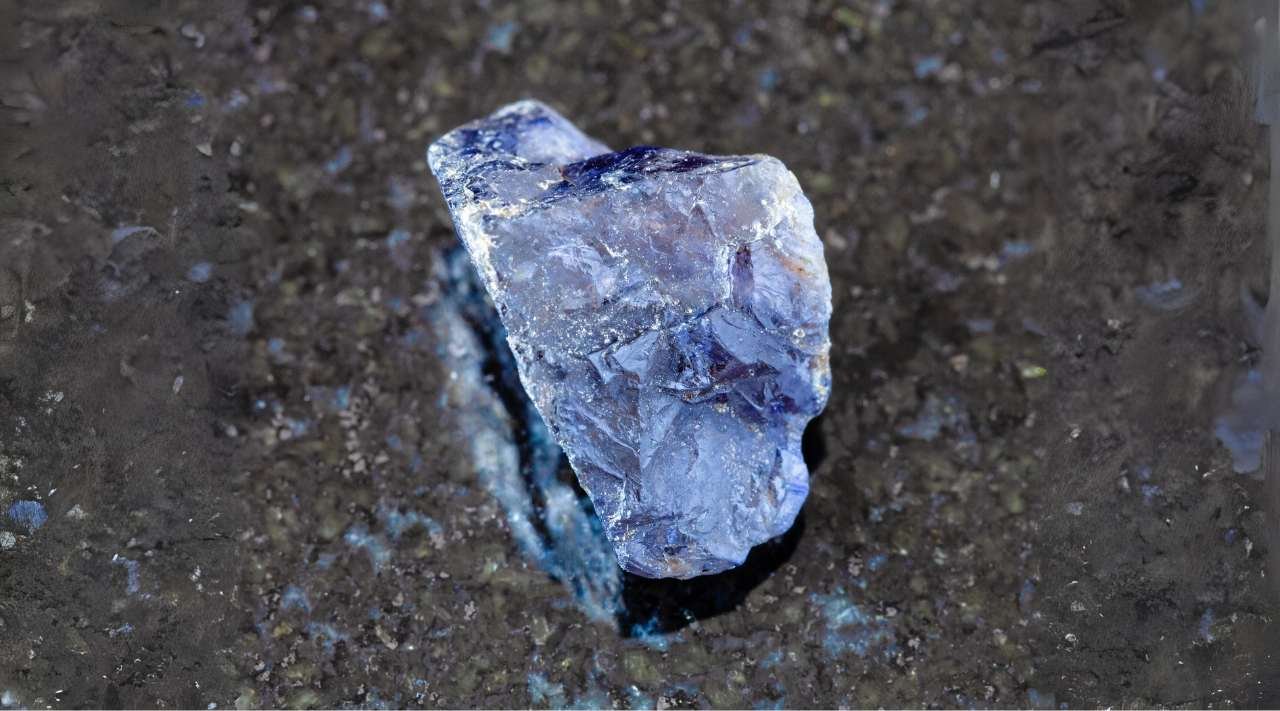
Mineral collectors may also appreciate rough cordierite specimens because the natural crystal structure can be visually fascinating.
Famous Iolite Geological Features
One of the most interesting things about iolite is that it is not simply valued for its color.
Its geological formation can provide information about the conditions under which rocks formed or transformed.
Cordierite can occur in metamorphic rocks associated with particular pressure and temperature conditions.
For geologists and mineral enthusiasts, this makes the mineral scientifically interesting in addition to its gemstone value.
Iolite in Modern Fashion
Blue and violet gemstones remain popular in jewelry design because they can complement many metals and clothing styles.
Iolite can work particularly well with:
- Silver
- White gold
- Yellow gold
- Rose gold
- Platinum-colored settings
Its cool blue-violet appearance can create a sophisticated look without being as conventional as sapphire.
Modern jewelry designers may use iolite as a center stone, accent gemstone, or part of multi-stone designs.
Why Choose Iolite?
There are many reasons someone might choose iolite.
First, it has a distinctive natural color.
Second, its pleochroism gives it an unusual visual character.
Third, it has a fascinating connection with navigation and the Viking’s Compass story.
Fourth, it can offer an attractive alternative to more expensive blue gemstones.
Finally, it has both gemstone and mineralogical interest.
For people who enjoy gemstones with a story, iolite is particularly appealing.
Advantages of Iolite Stone
Some major advantages include:
- Attractive blue-violet color
- Strong pleochroism
- Interesting geological history
- Viking navigation association
- Generally accessible compared with some premium blue gemstones
- Suitable for many jewelry styles
- Interesting for collectors
- Natural gemstone character
Disadvantages of Iolite Stone
Iolite also has some limitations.
- It is not as hard as sapphire or diamond.
- Strong pleochroism can make some stones appear grayish.
- Poor cutting can reduce its visual appeal.
- It requires care in everyday jewelry.
- Quality can vary considerably.
- Some imitations or misidentified blue gemstones can create confusion for inexperienced buyers.
Understanding these factors can help buyers make informed decisions.
Iolite Stone for Men
Iolite can work well in men’s jewelry because of its deep blue and violet tones.
Possible designs include:
- Men’s rings
- Cufflinks
- Pendants
- Tie pins
- Bracelets
Darker iolite can create a subtle and sophisticated appearance.
Iolite Stone for Women
Iolite is also popular for women’s jewelry.
Its violet-blue color works beautifully in:
- Earrings
- Pendant necklaces
- Rings
- Bracelets
- Birthstone-inspired jewelry
- Fashion jewelry
The gemstone’s color can range from subtle to dramatic depending on the quality and cut.
Iolite and Personal Style
One of the most appealing things about iolite is its individuality.
Two stones can look noticeably different because of variations in color, clarity, orientation, and pleochroism.
For someone who does not want a very common gemstone, iolite can provide a more unusual option.
Its blue-violet appearance can be elegant while remaining distinctive.
Frequently Asked Questions About Iolite Stone
What is iolite stone?
Iolite is a blue-to-violet gemstone variety of the mineral cordierite. It is known for strong pleochroism, meaning it can show different colors when viewed from different directions.
What color is iolite?
Iolite is commonly blue, violet-blue, purplish-blue, or grayish-blue. Its color can change visually depending on viewing direction.
Is iolite a real gemstone?
Yes. Iolite is a natural gemstone variety of cordierite.
Is iolite expensive?
Iolite is generally more accessible in price than many fine blue sapphires, but its value depends on color, clarity, cut, size, and quality.
Is iolite harder than quartz?
Iolite has a Mohs hardness of approximately 7–7.5, while quartz has a hardness of 7. Iolite is therefore slightly harder on the Mohs scale.
Is iolite good for jewelry?
Yes. Iolite can be used in rings, earrings, necklaces, pendants, and bracelets. Because it is moderately hard, it should be protected from strong impacts and scratches.
Why is iolite called the Viking’s Compass?
Iolite is associated with the Viking’s Compass because transparent cordierite has optical properties that can interact with polarized sunlight and may have been useful for navigation.
Does iolite change color?
Iolite displays pleochroism, meaning it can show different colors when viewed from different directions. This is different from the color-change phenomenon of certain other gemstones.
Can iolite be worn every day?
It can be worn regularly with appropriate care, but it is less resistant to scratching and impact than sapphire or diamond.
How should iolite be cleaned?
Gentle cleaning with lukewarm water, mild soap, and a soft cloth is generally appropriate. Avoid harsh chemicals and abrasive cleaners.
Is iolite a birthstone?
Iolite is sometimes used as an alternative or modern birthstone in various gemstone lists, but it is not one of the universally standardized traditional birthstones.
Where is iolite found?
Iolite and cordierite occur in several regions, including parts of India, Sri Lanka, Madagascar, Myanmar, Tanzania, Brazil, Norway, Canada, and the United States.
Is iolite natural?
Gem-quality iolite can occur naturally as a mineral variety of cordierite. Individual stones should still be evaluated properly if authenticity is important.
Can iolite be used in an engagement ring?
Yes, but because its hardness is lower than sapphire or diamond, it requires more careful handling and may benefit from a protective setting.
What makes iolite unique?
Its strong pleochroism is one of its most distinctive features. The stone can show blue, violet, and grayish tones depending on the viewing direction.
Final Thoughts on Iolite Stone
Iolite is a remarkable gemstone that combines beautiful blue-violet color with unusual optical properties and a fascinating historical story.
Its strong pleochroism gives each stone a distinctive appearance, while its association with the Viking’s Compass adds an element of adventure and exploration.
Although iolite is not as hard as sapphire or diamond, its hardness of approximately 7–7.5 makes it suitable for many types of jewelry when handled properly.
For gemstone collectors, iolite offers both mineralogical and aesthetic interest. For jewelry lovers, it provides an attractive alternative to more traditional blue gemstones.
When purchasing iolite, pay close attention to color, clarity, cut, transparency, and pleochroism. A well-cut stone with attractive blue-violet color can be exceptionally beautiful.
Whether you are interested in gemstones, jewelry, geology, history, or simply discovering unique natural stones, iolite deserves a place on your list of fascinating gemstones.
SEO Keywords
Iolite stone, iolite gemstone, iolite stone meaning, iolite stone benefits, iolite price, iolite jewelry, iolite color, iolite properties, iolite gemstone meaning, blue iolite stone, violet iolite, natural iolite stone, iolite crystal, iolite birthstone, iolite stone jewelry, Viking compass stone, iolite gemstone price, iolite hardness, iolite vs sapphire, iolite vs tanzanite, iolite healing properties, iolite stone care, where is iolite found, how to identify iolite, iolite gemstone value, iolite ring, iolite necklace, iolite earrings, iolite pendant, natural blue gemstone, blue violet gemstone.
Suggested SEO Meta Title
Iolite Stone: Meaning, Properties, Benefits, Price & Jewelry Guide
Suggested SEO Meta Description
Discover everything about iolite stone, including its meaning, color, properties, history, price, benefits, jewelry uses, care tips, and why it is called the Viking’s Compass.
Suggested URL Slug
iolite-stone-meaning-properties-price-jewelry-guide