Blue Lace Agate Stone: Complete Guide, Meaning, Properties, Benefits, Uses and Care
Introduction to Blue Lace Agate Stone
Blue Lace Agate is one of the most beautiful and recognizable varieties of agate. Known for its soft blue color, delicate white banding, and peaceful appearance, this gemstone has become popular among collectors, jewelry lovers, crystal enthusiasts, and people who appreciate natural stones. Its gentle colors and intricate patterns make every piece unique.
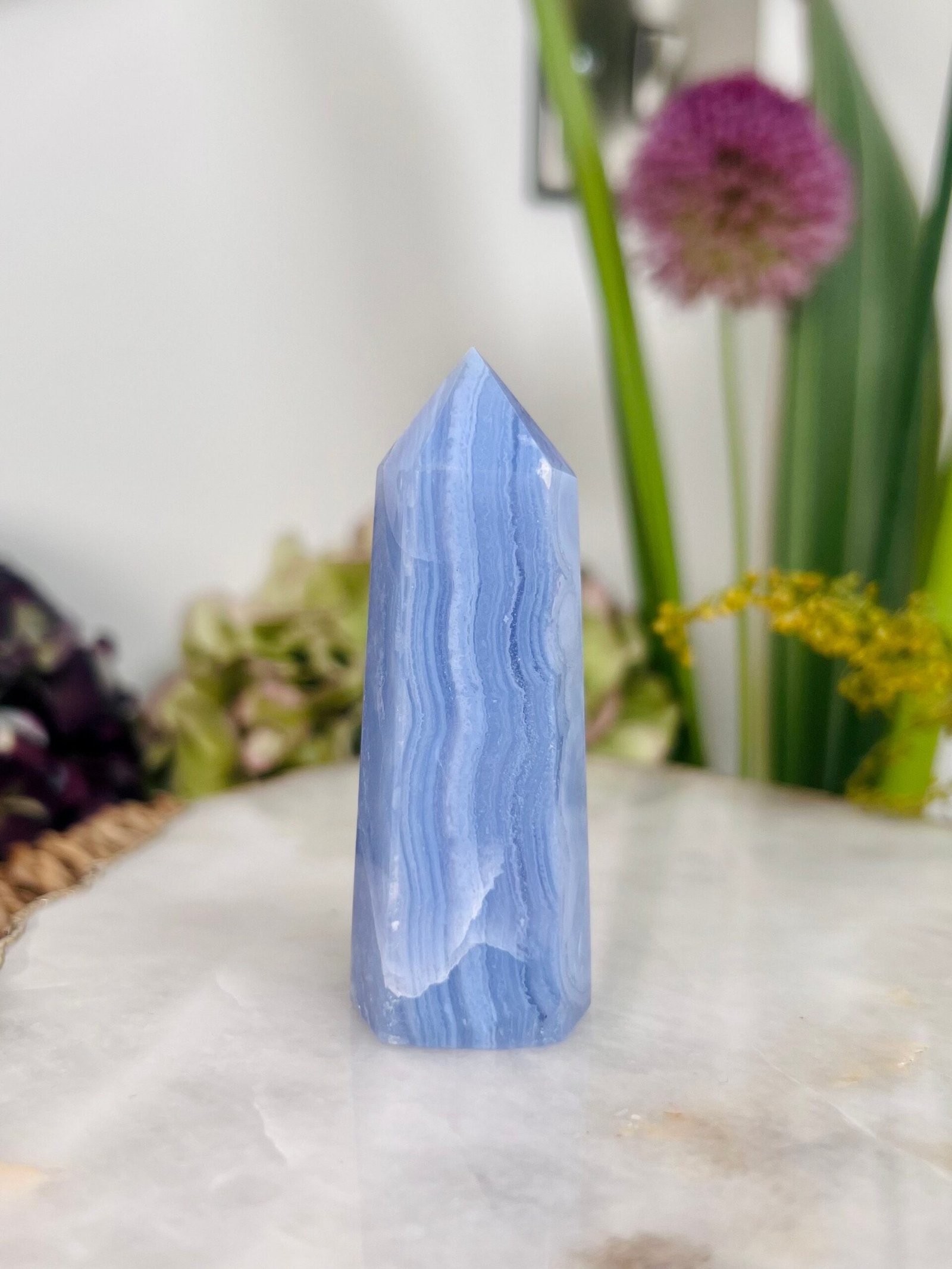
Agate is a variety of chalcedony, which belongs to the quartz family. Blue Lace Agate is especially admired for its fine layers and lace-like patterns. The stone may display pale blue, sky blue, bluish-white, and sometimes slightly gray tones. Its natural bands often form waves, lines, or cloud-like patterns across the surface.
Beyond its visual beauty, Blue Lace Agate has a long history of being associated with calmness, communication, balance, and peaceful energy in crystal traditions. These traditional beliefs are not scientific medical claims, but they are an important part of why people enjoy and collect this gemstone.
Whether you are interested in gemstones, jewelry, geology, crystal collecting, or simply want to learn more about this fascinating stone, this complete guide explains everything you need to know about Blue Lace Agate.
What Is Blue Lace Agate?
Blue Lace Agate is a banded variety of chalcedony that is recognized primarily for its soft blue color and delicate lace-like patterns. Chalcedony is a microcrystalline form of quartz, meaning its quartz crystals are extremely small and usually cannot be seen individually without magnification.
The characteristic appearance of Blue Lace Agate comes from layers and bands formed during the stone’s geological development. These layers can create beautiful patterns that resemble lace, waves, clouds, or ribbons.
The blue color is usually subtle rather than extremely intense. This soft coloration is one of the reasons Blue Lace Agate is so popular in decorative objects and jewelry.
Unlike many brightly colored gemstones, Blue Lace Agate has a naturally gentle appearance. Its understated beauty works particularly well in pendants, bracelets, earrings, cabochons, polished stones, and ornamental pieces.
Blue Lace Agate Meaning
Blue Lace Agate is traditionally associated with peace, calmness, gentle communication, patience, and emotional balance. Because of its soft blue appearance, many crystal traditions connect the stone with peaceful thoughts and clear expression.
In crystal folklore, Blue Lace Agate is sometimes described as a stone of communication. People who use crystals symbolically may choose it as a reminder to communicate thoughtfully, listen carefully, and express themselves with patience.
It is important to distinguish traditional crystal beliefs from scientific evidence. There is no reliable scientific evidence that Blue Lace Agate can treat medical conditions or directly change a person’s physical or mental health. Its meaning is primarily cultural, symbolic, and personal.
What Does Blue Lace Agate Look Like?
Blue Lace Agate is famous for its soft and elegant appearance. Most specimens have a pale blue base color combined with white or lighter bands.
Common visual characteristics include:
- Pale blue color
- Light sky-blue shades
- White lace-like bands
- Curved lines
- Wavy patterns
- Cloud-like formations
- Translucent edges in some specimens
- Smooth polished surfaces
- Natural variations from one specimen to another
The banding is one of the most important features of this gemstone. Some pieces have very fine lines, while others display broader curved bands.
Because Blue Lace Agate is a natural stone, no two specimens are exactly alike. This individuality adds to its appeal among collectors and jewelry enthusiasts.
Blue Lace Agate Color
The most recognizable color of Blue Lace Agate is a soft, light blue. However, individual specimens can vary considerably.
Some stones appear almost powder blue, while others have a slightly deeper blue-gray appearance. White or pale bands commonly contrast with the blue background.
The color can sometimes appear different depending on lighting. Natural daylight may reveal subtle layers that are less noticeable under artificial lighting.
When buying Blue Lace Agate, it is useful to look at the stone under different lighting conditions and examine its natural banding closely.
Blue Lace Agate Geological Formation
Blue Lace Agate forms through geological processes involving silica-rich fluids. Agate formation generally occurs when silica-bearing fluids enter cavities or openings in volcanic rocks.
Over long periods, silica is deposited in layers. Changes in the composition of the fluids and the conditions within the cavity can create different bands and patterns.
Repeated deposition can produce the characteristic layered structure associated with agate.
The exact geological processes responsible for the blue coloration and fine patterns can vary depending on the specimen and its geological environment.
The slow formation process is one reason agates can contain incredibly detailed internal patterns.
Where Is Blue Lace Agate Found?
Blue Lace Agate is particularly famous for specimens associated with Namibia. Namibian Blue Lace Agate has become highly valued among collectors because of its attractive blue coloration and delicate banding.
Agates and related chalcedony materials occur in many parts of the world, but not every blue agate is Blue Lace Agate. The exact appearance, quality, and characteristics can vary according to geological locality.
When purchasing a specimen described as Blue Lace Agate, buyers should pay attention to its color, natural pattern, transparency, surface quality, and seller information.
Blue Lace Agate History
Agate has been appreciated by humans for thousands of years. Ancient cultures used various forms of agate for decorative objects, seals, ornaments, beads, and jewelry.
The name “agate” is traditionally connected with the ancient Greek name for the Achates River, associated with agate discoveries in Sicily.
Blue Lace Agate became especially popular among modern gemstone and crystal collectors because of its unusual pale-blue color and delicate banding.
Today, it is commonly sold as polished stones, cabochons, beads, jewelry, specimens, and decorative pieces.
Blue Lace Agate Symbolism
Blue Lace Agate carries several symbolic meanings in different crystal traditions.
Common symbolic associations include:
Peace
Its soft blue appearance is often associated with peacefulness and relaxation.
Communication
Many crystal enthusiasts associate Blue Lace Agate with thoughtful communication and self-expression.
Patience
The stone is sometimes used symbolically as a reminder to remain patient and calm.
Balance
Its gentle appearance makes it a popular symbolic stone for emotional balance.
Clarity
Some people associate its clean patterns and blue color with clear thinking and expression.
These are traditional and symbolic interpretations rather than scientifically established effects.
Blue Lace Agate Benefits
Blue Lace Agate is often described in crystal communities as a calming and communication-focused stone. However, these benefits should be understood as traditional beliefs rather than medical facts.
1. Associated With Calmness
Many people enjoy Blue Lace Agate because its soft colors create a peaceful visual impression.
2. Symbol of Communication
It is commonly associated with clear, gentle, and honest communication.
3. Encourages Patience Symbolically
People may keep Blue Lace Agate as a reminder to slow down and approach situations thoughtfully.
4. Beautiful Decorative Stone
Its natural patterns make it excellent for jewelry and home decoration.
5. Popular Collector’s Gemstone
Unique banding makes Blue Lace Agate interesting for mineral and gemstone collections.
6. Suitable for Jewelry
Its attractive color and ability to take a good polish make it suitable for many jewelry designs.
Blue Lace Agate Healing Properties: What You Should Know
Blue Lace Agate is sometimes described online as having “healing properties.” These claims generally come from crystal traditions rather than scientific research.
There is no established scientific evidence that Blue Lace Agate can cure diseases, replace medical treatment, or directly treat physical or psychological conditions.
However, people can still enjoy gemstones for cultural, artistic, spiritual, or personal reasons. A stone may serve as a meaningful reminder of a personal goal, such as staying calm or communicating thoughtfully.
For health concerns, evidence-based medical care should always be used instead of relying on crystals.
Blue Lace Agate and the Throat Chakra
In some modern crystal traditions, Blue Lace Agate is associated with the throat chakra because of its blue color.
The throat chakra is part of a spiritual chakra system rather than a concept recognized as an anatomical structure in modern medicine.
Crystal enthusiasts may use Blue Lace Agate symbolically when focusing on:
- Communication
- Self-expression
- Listening
- Confidence in speaking
- Honest conversation
- Personal expression
These associations are spiritual traditions rather than scientific findings.
Blue Lace Agate Jewelry
Blue Lace Agate is a popular choice for jewelry because of its soft color and attractive patterns.
Common jewelry types include:
- Blue Lace Agate necklaces
- Blue Lace Agate pendants
- Blue Lace Agate bracelets
- Blue Lace Agate rings
- Blue Lace Agate earrings
- Blue Lace Agate beads
- Blue Lace Agate cabochons
A polished Blue Lace Agate cabochon can display its natural bands beautifully.
Because the stone usually has a subtle color, it can work well with silver, white metals, gold-colored settings, and other natural gemstones.
Blue Lace Agate Necklace
A Blue Lace Agate necklace can be an elegant way to display the stone’s natural banding. Pendants are especially popular because a larger polished piece allows the pattern to remain visible.
When selecting a necklace, look closely at the stone’s natural lines. A high-quality piece should have an attractive pattern that appeals to you personally.
Blue Lace Agate Bracelet
Blue Lace Agate bracelets are commonly made from polished beads. Each bead may show slightly different patterns, creating a natural and varied appearance.
A bracelet can combine several shades of blue and white, making it a visually interesting accessory.
Blue Lace Agate Ring
Blue Lace Agate rings can have a unique appearance because each stone contains its own natural pattern.
However, rings are exposed to more physical contact than necklaces or earrings. It is therefore important to protect the stone from hard impacts and scratches.
Blue Lace Agate Earrings
Blue Lace Agate earrings are a popular option for people who prefer smaller gemstone jewelry.
Because earrings generally experience less physical impact than rings, they can be a practical way to enjoy this gemstone while keeping it visible.
Blue Lace Agate Cabochons
Cabochons are polished gemstones without traditional faceted cuts. Blue Lace Agate is often cut into cabochons because its beauty comes from its patterns and bands.
A smooth dome-shaped cabochon can reveal the natural layers of the stone particularly well.
Blue Lace Agate Hardness
Blue Lace Agate is a variety of chalcedony and is associated with the quartz family. Quartz has a Mohs hardness of 7, which means Blue Lace Agate is reasonably durable for jewelry and decorative use.
However, hardness does not mean that the stone is impossible to damage. It can still be scratched or chipped under unfavorable conditions.
Proper care is especially important for rings and other jewelry that receive frequent contact.
Blue Lace Agate Durability
Blue Lace Agate is generally suitable for many types of jewelry and decorative applications when handled properly.
Avoid exposing it to strong impacts, extreme temperature changes, harsh chemicals, or abrasive materials.
Although it is relatively durable, natural gemstones should always be treated with care.
How to Clean Blue Lace Agate
Cleaning Blue Lace Agate is relatively simple.
A safe basic method is:
- Use lukewarm water.
- Add a small amount of mild soap if necessary.
- Gently wipe the stone with a soft cloth.
- Rinse carefully.
- Dry completely with another soft cloth.
Avoid aggressive cleaning methods unless you know that the stone and its treatment can safely tolerate them.
How to Care for Blue Lace Agate
To keep Blue Lace Agate looking beautiful:
- Store it separately from harder gemstones.
- Avoid dropping it.
- Keep it away from harsh chemicals.
- Do not expose it unnecessarily to extreme heat.
- Use a soft cloth for cleaning.
- Avoid abrasive cleaning materials.
- Store jewelry in a soft pouch or jewelry box.
Proper storage can help prevent scratches and accidental damage.
Blue Lace Agate vs Blue Calcite
Blue Lace Agate and Blue Calcite can sometimes be confused because both may have soft blue colors.
However, they are different minerals.
Blue Lace Agate is a variety of chalcedony, which belongs to the quartz family. Blue Calcite is a carbonate mineral with different physical and chemical properties.
Blue Lace Agate is generally harder than Blue Calcite, making it more suitable for certain types of jewelry.
Blue Lace Agate vs Blue Chalcedony
Blue Lace Agate is itself a type of chalcedony, but the term “blue chalcedony” can refer more broadly to blue-colored chalcedony without the distinctive lace-like banding.
The most important visual difference is often the pattern. Blue Lace Agate is especially valued for its characteristic bands and lace-like formations.
Natural Blue Lace Agate vs Dyed Agate
Not every blue agate sold in the gemstone market is naturally blue.
Some agates can be dyed to create stronger colors. Natural Blue Lace Agate generally has a soft and subtle appearance rather than an unnaturally intense color.
When buying an expensive specimen, ask the seller whether the stone has been dyed, treated, or enhanced.
Understanding treatments can help buyers make informed purchasing decisions.
How to Identify Blue Lace Agate
Identifying Blue Lace Agate requires attention to several characteristics.
Look for:
- Soft blue coloration
- Fine white or lighter banding
- Lace-like patterns
- Natural variation
- Chalcedony-like appearance
- Smooth polished surfaces in finished stones
However, visual identification alone is not always enough to determine authenticity or treatment.
For expensive specimens, professional gemological testing can provide more confidence.
Is Blue Lace Agate Rare?
Blue Lace Agate is considered desirable because of its distinctive appearance, but rarity can vary significantly depending on quality, color, pattern, size, and locality.
Fine specimens with attractive blue color and highly detailed banding can be more difficult to find than ordinary agate.
The term “rare” should therefore be used carefully when evaluating individual pieces.
Blue Lace Agate Value
The value of Blue Lace Agate depends on several factors.
Color
Soft, attractive blue coloration can increase desirability.
Pattern
Clear and interesting lace-like banding can make a specimen more appealing.
Size
Larger high-quality pieces may command higher prices.
Condition
Stones without major cracks, chips, or damage are generally more desirable.
Origin
Known locality information can influence collector interest.
Craftsmanship
For jewelry, the quality of cutting, polishing, setting, and overall design also affects the final price.
There is no single fixed price for Blue Lace Agate because quality varies widely.
How Much Does Blue Lace Agate Cost?
Blue Lace Agate can range from relatively affordable small polished stones to significantly more expensive collector specimens.
Small tumbled stones and beads are usually more accessible, while large pieces with exceptional color and intricate banding may cost considerably more.
Jewelry prices also depend on the metal, craftsmanship, stone size, and brand.
Always compare multiple sellers before making a purchase.
How to Buy Blue Lace Agate
When buying Blue Lace Agate, consider the following factors:
Examine the Color
Look for a natural-looking blue color and attractive contrast.
Study the Banding
The lace-like pattern is one of the stone’s most desirable characteristics.
Ask About Treatments
Find out whether the stone is natural, dyed, stabilized, or otherwise treated.
Check for Damage
Inspect the stone for cracks, chips, or major surface damage.
Consider the Purpose
A specimen for collecting may have different requirements from a stone intended for jewelry.
Compare Prices
Compare similar pieces from several sellers rather than choosing based only on appearance.
Blue Lace Agate for Collectors
Blue Lace Agate can be an excellent addition to a gemstone collection.
Collectors often appreciate:
- Natural patterns
- Color variations
- Geological origin
- Polishing quality
- Large specimens
- Unusual formations
- Fine banding
A collection can include raw specimens, polished stones, cabochons, beads, and finished jewelry.
Blue Lace Agate Raw Stone
Raw Blue Lace Agate can look very different from polished material.
A rough specimen may have a less obvious surface appearance, while cutting and polishing can reveal internal patterns.
Collectors often enjoy raw pieces because they provide an opportunity to observe the natural texture and structure of the material.
Blue Lace Agate Polished Stone
Polishing can dramatically enhance the visual appeal of Blue Lace Agate.
A polished surface allows light to interact with the stone more effectively and makes its natural bands easier to see.
Polished stones are commonly used as:
- Pocket stones
- Display pieces
- Jewelry components
- Decorative objects
- Collection specimens
Blue Lace Agate for Home Decor
Blue Lace Agate can also be used as a decorative stone.
Large polished slabs, spheres, freeforms, towers, and other shapes can make attractive display pieces.
Its soft blue color can complement many interior styles, especially minimalist, natural, modern, and coastal-inspired spaces.
Blue Lace Agate Sphere
A Blue Lace Agate sphere can showcase patterns across multiple sides of the stone.
Because a sphere provides a rounded viewing surface, natural bands may appear to move around the object.
Large spheres can be used as decorative mineral specimens, while smaller spheres are popular among collectors.
Blue Lace Agate Tower
Tower-shaped stones are another popular format.
A polished tower can display vertical sections of natural banding and provide an attractive decorative shape.
The quality of a tower depends heavily on the material used and how the stone was cut and polished.
Blue Lace Agate Tumbled Stones
Tumbled Blue Lace Agate is usually smooth and rounded as a result of mechanical polishing.
Tumbled stones are popular because they are easy to handle and display.
Each piece can have a different combination of blue and white patterns.
Blue Lace Agate in Crystal Collections
Blue Lace Agate is often included in crystal collections because of its distinctive color and banding.
Collectors may display it alongside other quartz-family materials, colorful gemstones, minerals, and agates.
Its soft blue appearance provides an interesting contrast to darker or more colorful stones.
Blue Lace Agate and Spiritual Practices
Some people incorporate Blue Lace Agate into meditation or spiritual practices.
It may be held as a symbolic object, placed near a meditation area, or kept as a personal reminder of calmness and thoughtful communication.
These practices are personal and cultural. There is no scientific evidence that the stone itself produces supernatural or medical effects.
Blue Lace Agate Meditation
People who enjoy meditation may choose Blue Lace Agate because of its peaceful appearance.
A simple symbolic practice might involve looking at the stone while focusing on slow breathing, quiet reflection, or a personal intention.
The benefit comes from the mindfulness practice itself rather than from scientifically proven physical effects of the gemstone.
Blue Lace Agate and Birthstones
Blue Lace Agate is not an official traditional birthstone for a particular month in the way that gemstones such as garnet, amethyst, or sapphire are commonly recognized.
However, some people choose it as a personal birthstone alternative because they like its color, symbolism, or appearance.
Blue Lace Agate as a Gift
Blue Lace Agate can make an attractive gift for someone interested in:
- Gemstones
- Jewelry
- Minerals
- Natural objects
- Crystal collecting
- Home decor
- Symbolic gifts
A polished pendant or small specimen can be a thoughtful present.
Because its appearance is subtle and elegant, it can suit many different personal styles.
Blue Lace Agate for Beginners
Blue Lace Agate is a good gemstone for beginners who want to learn about agates and chalcedony.
It offers an opportunity to study:
- Color
- Banding
- Transparency
- Polishing
- Geological formation
- Gemstone identification
- Jewelry applications
Beginners can start with small polished specimens before purchasing larger collector pieces.
Interesting Facts About Blue Lace Agate
Here are several interesting facts about Blue Lace Agate:
- It belongs to the agate family.
- Agate is a form of chalcedony.
- Chalcedony belongs to the quartz family.
- Blue Lace Agate is famous for its delicate banding.
- Its color is generally soft rather than extremely bright.
- Namibia is particularly associated with fine Blue Lace Agate.
- It can be cut into attractive cabochons.
- It is popular in gemstone jewelry.
- Its patterns are naturally formed.
- Every natural specimen can have a unique appearance.
- It can be polished to a smooth surface.
- Crystal traditions commonly associate it with communication and calmness.
- Its traditional healing claims are not scientifically established.
- It is popular with mineral collectors.
- It can be used in decorative objects.
Common Uses of Blue Lace Agate
Blue Lace Agate has many decorative and collecting uses.
Jewelry
It is commonly used for necklaces, earrings, bracelets, rings, and pendants.
Collecting
Mineral enthusiasts collect raw and polished specimens.
Decoration
Large pieces can be displayed in homes, offices, or collections.
Cabochons
Its patterns make it suitable for cabochon cutting.
Beads
Small pieces can be shaped into beads for jewelry.
Symbolic Use
Some people use it as a personal symbol of calmness or communication.
Blue Lace Agate SEO Keywords
If you are writing additional content about this gemstone, useful SEO keywords include:
- Blue Lace Agate
- Blue Lace Agate stone
- Blue Lace Agate meaning
- Blue Lace Agate benefits
- Blue Lace Agate properties
- Blue Lace Agate healing properties
- Blue Lace Agate jewelry
- Blue Lace Agate necklace
- Blue Lace Agate bracelet
- Blue Lace Agate crystal
- Blue Lace Agate gemstone
- natural Blue Lace Agate
- Blue Lace Agate value
- Blue Lace Agate price
- Blue Lace Agate meaning and benefits
- Blue Lace Agate spiritual meaning
- Blue Lace Agate stone benefits
- Blue Lace Agate care
- Blue Lace Agate identification
- Blue Lace Agate origin
Frequently Asked Questions About Blue Lace Agate
What is Blue Lace Agate?
Blue Lace Agate is a blue variety of banded chalcedony known for its delicate white or lighter-colored lace-like patterns.
What does Blue Lace Agate mean?
In crystal traditions, Blue Lace Agate is commonly associated with calmness, communication, patience, and peaceful expression.
Is Blue Lace Agate a real stone?
Yes. Blue Lace Agate is a natural variety of agate and chalcedony.
Where is Blue Lace Agate found?
Blue Lace Agate is particularly associated with Namibia, although agate and chalcedony occur in many regions worldwide.
Is Blue Lace Agate expensive?
Its price varies depending on color, pattern, size, quality, origin, treatment, and craftsmanship. Small pieces can be affordable, while exceptional specimens can be much more valuable.
Is Blue Lace Agate rare?
High-quality specimens with attractive color and detailed lace-like banding can be relatively difficult to find, but rarity varies between individual specimens.
Can Blue Lace Agate be used in jewelry?
Yes. It is commonly used for pendants, earrings, bracelets, rings, beads, and cabochons.
Is Blue Lace Agate durable?
As a quartz-family material, it is reasonably durable, but it can still be scratched, chipped, or damaged by strong impacts.
How should Blue Lace Agate be cleaned?
A gentle cleaning method using lukewarm water, mild soap when necessary, and a soft cloth is generally appropriate.
Can Blue Lace Agate fade?
Strong environmental exposure and certain treatments can affect gemstones. Proper storage away from harsh conditions is recommended.
What chakra is associated with Blue Lace Agate?
Modern crystal traditions commonly associate Blue Lace Agate with the throat chakra because of its blue color.
Is Blue Lace Agate good for meditation?
Many people use it symbolically during meditation because they find its appearance peaceful. Any benefit should be understood as part of the individual’s mindfulness or spiritual practice rather than a scientifically proven effect of the stone.
How can I tell if Blue Lace Agate is genuine?
Look for its natural blue coloration and distinctive banding, and ask about treatments. For valuable specimens, professional gemological testing is the safest way to establish authenticity.
Final Thoughts on Blue Lace Agate
Blue Lace Agate is a beautiful gemstone admired for its soft blue color, delicate white bands, and unique natural patterns. As a variety of agate and chalcedony, it represents an interesting combination of geology, natural beauty, jewelry design, and collecting.
Its gentle appearance makes it particularly popular among people who prefer subtle gemstones rather than extremely bright or dramatic colors. Whether displayed as a raw mineral specimen, polished stone, cabochon, bracelet, necklace, or decorative object, Blue Lace Agate can be an attractive addition to a gemstone collection.
Traditional crystal practices often connect Blue Lace Agate with calmness, communication, patience, and balance. These associations can provide personal or symbolic meaning, but they should not be confused with scientifically proven medical effects.
For collectors and jewelry lovers, the most important qualities are natural appearance, attractive banding, condition, craftsmanship, and authenticity. With proper care, a good-quality Blue Lace Agate specimen can remain a beautiful part of a personal collection for many years.
Ultimately, the appeal of Blue Lace Agate comes from its combination of soft color, intricate patterns, geological history, and individuality. No two natural pieces are exactly the same, making each specimen a small example of the remarkable beauty created by geological processes over time.