Topaz Stone: Complete Guide to Meaning, Colors, History, Properties, Uses, and Value
Introduction
Topaz is one of the most beautiful and fascinating gemstones found in the world. Known for its attractive colors, excellent transparency, impressive hardness, and sparkling appearance, topaz has been admired for centuries. Although many people immediately associate topaz with bright blue gemstones, natural topaz can occur in several colors, including yellow, golden, pink, orange, brown, green, and colorless varieties.
The gemstone is popular in jewelry because it can be cut into many different shapes and polished to produce a brilliant shine. Topaz rings, necklaces, earrings, bracelets, and pendants are found in jewelry collections around the world. Its combination of beauty, durability, and relatively wide availability makes it an interesting gemstone for both beginners and experienced collectors.
Topaz also has a long history and an interesting geological story. It forms deep inside the Earth under specific conditions and can be found in several countries. Some varieties are particularly rare, while others are more commonly available.
In this comprehensive guide, we will explore everything you need to know about topaz stone, including its meaning, history, colors, physical properties, formation, varieties, jewelry uses, value, care instructions, identification, and buying considerations.
What Is Topaz Stone?
Topaz is a naturally occurring gemstone and mineral composed primarily of aluminum and fluorine with hydroxyl groups. Its chemical formula is commonly written as Al₂SiO₄(F,OH)₂.
Topaz belongs to the silicate mineral group and is valued for its transparency, luster, color, and hardness. On the Mohs hardness scale, topaz has a hardness of 8, making it harder than quartz and many commonly used gemstones.
Pure topaz is generally colorless. Different colors develop because of trace elements, structural variations, natural irradiation, or treatments.
One of the most recognizable modern varieties is blue topaz. However, natural blue topaz is relatively uncommon, and much of the blue topaz used in jewelry is produced by treating colorless topaz.
Topaz Stone Meaning
Topaz has been associated with many meanings throughout history. Different cultures have given the gemstone symbolic interpretations based on its color, appearance, and historical traditions.
Topaz is commonly associated with ideas such as:
- Clarity
- Strength
- Confidence
- Friendship
- Happiness
- Creativity
- Calmness
- Abundance
- Personal growth
Golden and yellow topaz are often associated with warmth, energy, and prosperity, while blue topaz is commonly connected with calmness, communication, and peacefulness.
These meanings are cultural and symbolic rather than scientific. Wearing topaz can be meaningful because of personal beliefs, traditions, or simply appreciation for the gemstone’s beauty.
History of Topaz
Topaz has been known for thousands of years. Ancient civilizations valued colorful gemstones for jewelry, decoration, and cultural purposes.
The exact origin of the name “topaz” is debated. One traditional explanation connects the name with Topazios, an ancient island associated with the Red Sea. Another possibility is that the name has roots in ancient languages relating to searching or discovering.
Throughout history, yellowish and golden gemstones were sometimes called topaz even when they were actually different minerals. This historical confusion is important because some famous gemstones described as topaz in older records have later been identified as other materials.
As mineralogy developed, scientists became better at distinguishing topaz from similar-looking gemstones.
Today, topaz is recognized as a distinct mineral with well-defined chemical and physical properties.
Where Is Topaz Found?
Topaz deposits occur in several parts of the world. Important sources have historically included countries such as:
- Brazil
- Pakistan
- Russia
- United States
- Sri Lanka
- Nigeria
- Mexico
- Myanmar
- Madagascar
- Australia
Brazil is particularly famous for important topaz deposits and has produced impressive specimens in several colors.
The United States is also known for topaz, and it is the official state gemstone of Utah.
Pakistan has also become known among gemstone enthusiasts for attractive topaz specimens, particularly from the northern mountainous regions.
Topaz in Pakistan
Pakistan is home to many beautiful gemstones, and topaz is among the country’s notable mineral resources.
Some Pakistani topaz is associated with mountainous regions, where geological conditions have allowed large and attractive crystals to form.
Pakistani gemstones are appreciated by collectors because they can display attractive colors, transparency, and crystal forms.
The country’s northern regions are particularly important for gemstone production, although mining conditions can vary considerably depending on location and terrain.
For gemstone enthusiasts, Pakistani topaz is an interesting part of the country’s broader mineral heritage.
Topaz Stone Colors
One of the most interesting features of topaz is its range of colors.
Blue Topaz
Blue topaz is perhaps the most recognizable modern variety.
It can range from very pale blue to deeper blue shades. Common commercial descriptions include:
- Sky Blue
- Swiss Blue
- London Blue
Blue topaz is widely used in jewelry because of its attractive color and sparkling appearance.
Much of the blue topaz available commercially begins as colorless topaz and receives treatment to develop its blue color.
Imperial Topaz
Imperial topaz is one of the most desirable topaz varieties.
It is generally associated with warm colors such as:
- Orange
- Golden yellow
- Pinkish orange
- Reddish orange
Imperial topaz from Brazil has historically been especially important in the gemstone market.
High-quality imperial topaz can be rare and valuable, particularly when it displays strong color, excellent clarity, good cutting, and attractive size.
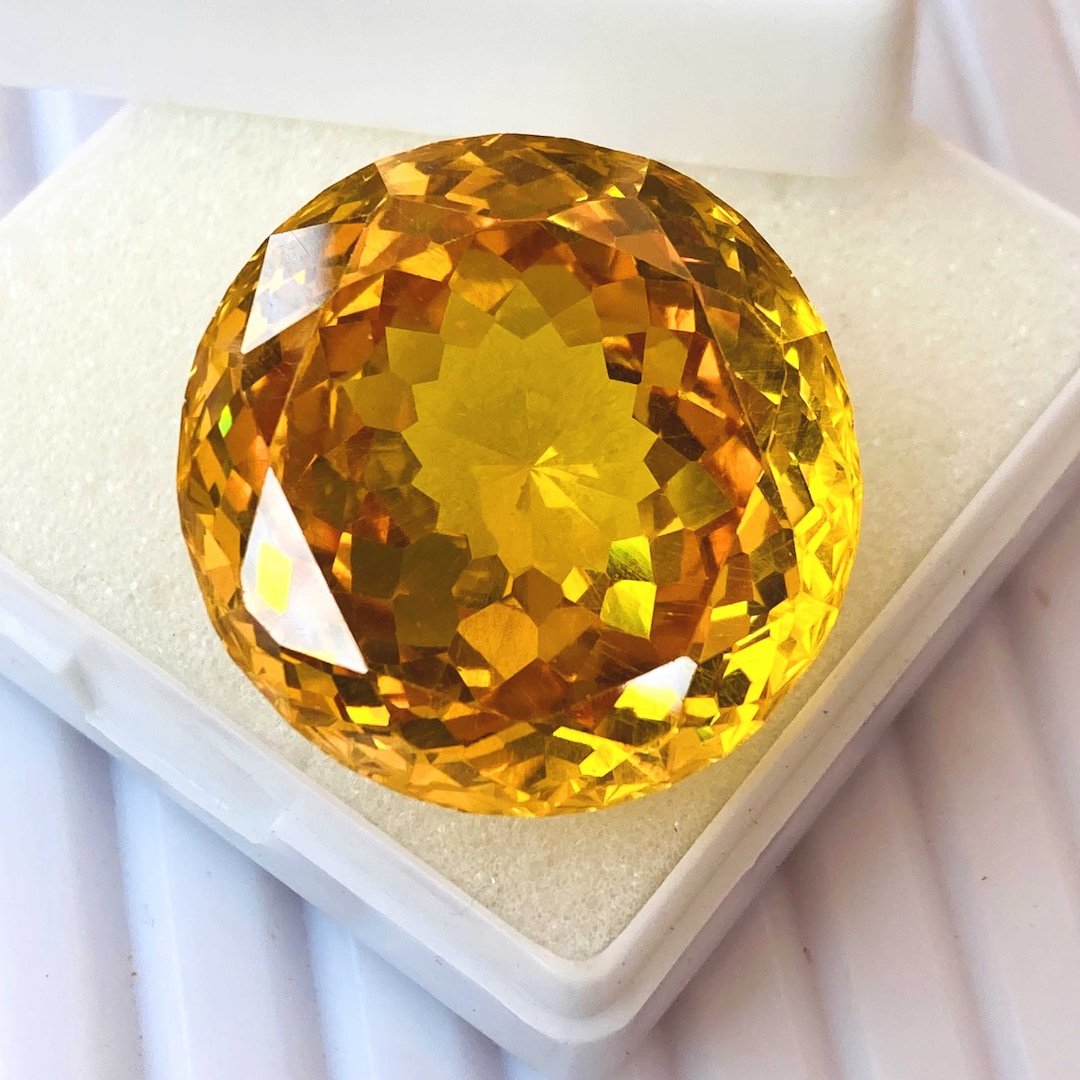
Yellow Topaz
Yellow topaz is a classic color variety.
It can range from pale yellow to rich golden tones. Historically, yellow gemstones were sometimes confused with other minerals, but genuine yellow topaz remains an attractive gemstone in its own right.
Yellow topaz is often chosen for jewelry because its warm color pairs well with yellow gold.
Golden Topaz
Golden topaz has a rich yellow-to-orange appearance.
Its warm color can make it particularly attractive in larger gemstone cuts. Golden topaz may be used in rings, pendants, earrings, and collector specimens.
Pink Topaz
Natural pink topaz is less common than blue or colorless treated topaz.
Pink topaz can display delicate pastel shades or stronger pink tones. Because attractive natural pink material can be uncommon, it may command higher prices than more widely available varieties.
Orange Topaz
Orange topaz can be particularly attractive when the color is strong and evenly distributed.
Some orange topaz specimens overlap visually with imperial topaz, depending on the exact color and market terminology.
Colorless Topaz
Pure topaz is generally colorless.
Colorless topaz is often transparent and can be cut into brilliant shapes that produce strong sparkle.
It is also commonly used as the starting material for treated blue topaz.
Brown Topaz
Brown topaz occurs naturally and can display earthy shades ranging from light brown to deeper tones.
Although it may receive less attention than blue or imperial topaz, attractive brown specimens can be interesting to collectors.
Topaz Stone Properties
Topaz has several physical characteristics that make it a useful gemstone.
Mineral Group
Topaz belongs to the silicate mineral group.
Chemical Composition
Its chemical formula is:
Al₂SiO₄(F,OH)₂
Mohs Hardness
Topaz has a Mohs hardness of 8.
This means it is relatively resistant to scratching.
Crystal System
Topaz crystallizes in the orthorhombic crystal system.
Luster
Topaz typically has a vitreous, or glass-like, luster.
Transparency
Topaz can be transparent to translucent, with high-quality gem material often showing excellent transparency.
Cleavage
Topaz has perfect cleavage in one direction. This is an important characteristic when cutting, setting, and wearing the gemstone.
How Is Topaz Formed?
Topaz generally forms in geological environments associated with igneous rocks.
It can develop in cavities and fractures within rocks where mineral-rich fluids are present. Under suitable temperature, pressure, and chemical conditions, the elements needed to form topaz combine and crystallize.
Large topaz crystals can sometimes develop when geological conditions remain favorable for a long period.
The geological formation process explains why topaz can occur in impressive crystal specimens as well as gem-quality material.
Natural Topaz vs Treated Topaz
A very important topic for gemstone buyers is the difference between natural color and treated color.
Topaz may be treated to improve or change its appearance.
For example, colorless topaz can be treated to produce attractive blue shades.
Treatment does not automatically mean that a gemstone is fake. Treated gemstones are genuine gemstones whose appearance has been modified through an accepted enhancement process.
However, buyers should understand whether a topaz is:
- Naturally colored
- Heat treated
- Irradiated
- Coated
- Otherwise enhanced
When purchasing expensive topaz, asking for treatment information and documentation can be helpful.
Blue Topaz Treatments
The popularity of blue topaz is largely connected to treatment technology.
Colorless topaz can be processed to create blue colors that are attractive and consistent.
Different treatment methods can produce different shades.
This is why the jewelry market contains a large amount of blue topaz even though naturally blue topaz is comparatively uncommon.
Consumers should therefore distinguish between blue-colored topaz and naturally blue topaz when discussing rarity and value.
Topaz vs Citrine
Topaz is sometimes confused with citrine because both can appear yellow or golden.
However, they are different minerals.
Topaz
- Mohs hardness: 8
- Mineral: Topaz
- Chemical composition: Aluminum silicate containing fluorine and hydroxyl
- Crystal system: Orthorhombic
Citrine
- Mohs hardness: 7
- Mineral: Quartz
- Chemical composition: Silicon dioxide
- Crystal system: Trigonal
Their colors can sometimes look similar, especially in yellow jewelry.
For this reason, professional identification may be necessary when the distinction matters.
Topaz vs Quartz
Topaz and quartz can both be transparent and highly attractive, but they differ in composition and hardness.
Topaz is harder, with a Mohs hardness of 8, while quartz has a hardness of 7.
Topaz also has a characteristic cleavage that should be considered when cutting and wearing it.
Topaz Jewelry
Topaz is widely used in jewelry.
Common topaz jewelry includes:
- Topaz rings
- Topaz earrings
- Topaz necklaces
- Topaz pendants
- Topaz bracelets
- Topaz brooches
Its transparency and range of colors make it suitable for many jewelry designs.
Topaz Rings
Topaz rings can feature large center stones because topaz crystals can occur in substantial sizes.
Blue topaz is popular for modern rings, while imperial and golden topaz can create a warmer and more traditional appearance.
Because topaz has perfect cleavage, protective settings can be beneficial, particularly for rings that may experience accidental impacts.
Topaz Earrings
Earrings are a practical way to wear topaz because they generally experience less physical impact than rings.
Blue topaz earrings are especially popular because the blue color can complement both casual and formal styles.
Topaz Necklaces
Topaz pendants can showcase larger stones without exposing them to as much impact as a ring.
Large faceted topaz gemstones can create impressive pendant designs.
Topaz Bracelets
Topaz bracelets can be attractive but should be handled carefully because gemstones mounted in bracelets may come into contact with hard surfaces.
Regular inspection of the setting can help maintain the jewelry.
Topaz Stone Value
The value of topaz depends on several factors.
Important factors include:
- Color
- Clarity
- Cut
- Carat weight
- Origin
- Treatment
- Rarity
- Overall appearance
Not every large topaz is highly valuable. Size alone does not determine gemstone quality.
A smaller natural gemstone with exceptional color and clarity may be more desirable than a much larger stone with less attractive characteristics.
What Makes Topaz Valuable?
Color
Color is one of the most important factors.
Rare and attractive natural colors can increase desirability.
Imperial topaz with strong orange, pink, or reddish-orange tones can be particularly valuable.
Clarity
Topaz often has good clarity.
A transparent stone with minimal visible inclusions can be especially attractive.
Cut
A well-executed cut improves brilliance and visual appeal.
Poor cutting can make even a beautiful crystal appear dull.
Carat Weight
Large topaz stones are available, but large size does not automatically mean high value.
The other quality factors must also be considered.
Topaz Stone Cut and Shapes
Topaz can be cut into many shapes.
Popular shapes include:
- Oval
- Round
- Cushion
- Emerald
- Pear
- Marquise
- Princess
- Heart
- Radiant
The choice of shape depends on the crystal, desired design, and intended jewelry setting.
A skilled gem cutter must also consider topaz’s cleavage when shaping the stone.
Topaz Birthstone
Topaz is commonly recognized as a birthstone associated with November.
Citrine is also commonly associated with November, giving people born during the month a choice between two different gemstone styles.
Topaz can be a meaningful birthday gift because of its wide range of colors and long historical association with November.
Topaz and November Birthstone Jewelry
People looking for November birthstone jewelry may choose:
- Blue topaz rings
- Golden topaz pendants
- Imperial topaz earrings
- Topaz necklaces
- Topaz bracelets
The best choice depends on personal taste and budget.
Symbolism of Blue Topaz
Blue topaz is often associated symbolically with:
- Calmness
- Communication
- Clarity
- Peace
- Trust
- Friendship
These associations are part of cultural and spiritual traditions and should not be considered scientifically proven effects.
Symbolism of Golden Topaz
Golden topaz is often connected with:
- Warmth
- Success
- Confidence
- Prosperity
- Positive energy
Again, these are symbolic meanings rather than scientifically established properties.
Is Topaz a Good Gemstone for Everyday Wear?
Topaz is relatively hard, making it resistant to everyday scratching.
However, hardness is not the same as toughness.
Because topaz has perfect cleavage, a strong impact in the wrong direction can cause damage.
For everyday jewelry, topaz can be suitable when worn with reasonable care.
Rings may require more caution than earrings or pendants because rings are exposed to more impacts.
How to Clean Topaz Stone
Cleaning topaz jewelry is relatively simple.
A safe general method is:
- Use lukewarm water.
- Add a small amount of mild soap.
- Gently clean the gemstone with a soft cloth.
- Rinse carefully.
- Dry with a soft, clean cloth.
Avoid sudden temperature changes and harsh cleaning methods.
Because topaz has cleavage, careful handling is recommended.
How to Care for Topaz Jewelry
To keep topaz jewelry looking attractive:
- Store it separately from harder gemstones.
- Avoid strong impacts.
- Remove rings before activities that could damage them.
- Keep jewelry away from harsh chemicals.
- Clean gently.
- Inspect settings periodically.
- Store gemstones in a soft-lined jewelry box.
Proper care can help preserve the gemstone’s appearance for many years.
Can Topaz Be Scratched?
Topaz has a Mohs hardness of 8, so it is relatively resistant to scratching.
However, harder materials can still scratch it.
Diamond, sapphire, and ruby are harder than topaz.
For this reason, topaz jewelry should not be stored loose together with harder gemstones.
Can Topaz Break?
Yes.
This is an important distinction.
A gemstone can be hard but still vulnerable to breaking or cleaving.
Topaz’s perfect cleavage means that a strong impact can potentially cause the stone to split.
This is why protective settings and careful handling are important.
How to Identify Real Topaz
Identifying a gemstone with certainty can be difficult without professional equipment.
Possible characteristics of genuine topaz include:
- High hardness
- Glass-like luster
- Strong transparency in quality specimens
- Characteristic crystal structure
- Distinct optical properties
However, visual inspection alone is not always enough.
If a stone is valuable, professional gemstone testing is the safest approach.
Common Topaz Imitations
Because topaz is popular, similar-looking materials may sometimes be sold under confusing names.
Potential look-alikes include:
- Quartz
- Citrine
- Glass
- Synthetic materials
- Other transparent gemstones
Professional gemological testing can determine whether a stone is actually topaz.
Natural Topaz vs Synthetic Topaz
Natural topaz forms through geological processes in nature.
Synthetic gemstones are created in laboratories.
Topaz is primarily encountered in the natural gemstone market, although imitation and treated materials can also exist.
A buyer should ask appropriate questions if natural origin is important.
Famous Topaz Specimens
Some of the world’s largest and most impressive topaz crystals have become famous among mineral collectors.
Large crystals can weigh many kilograms and demonstrate how dramatically topaz can grow under favorable geological conditions.
Some famous specimens are preserved in museums and mineral collections.
These specimens are valuable not only as gemstones but also as examples of Earth’s geological processes.
Topaz in Museums and Mineral Collections
Museums often display topaz crystals because of their size, crystal form, color, and geological importance.
A natural topaz crystal can look very different from a polished gemstone.
Collectors may appreciate both forms:
- Rough topaz crystals
- Faceted topaz gemstones
Rough crystals reveal the mineral’s natural structure, while faceted stones demonstrate the skill of gemstone cutting.
Buying Topaz Stone
When buying topaz, consider several factors.
1. Decide on the Color
Choose the color that appeals to you most.
Blue topaz is widely available, while natural imperial topaz can be considerably rarer.
2. Check Clarity
Look for a gemstone with attractive transparency and minimal distracting inclusions.
3. Examine the Cut
The gemstone should have good symmetry and pleasing proportions.
4. Ask About Treatment
Treatment information is especially important for blue topaz.
5. Compare Prices
Do not assume that a larger gemstone is automatically better.
6. Consider Certification
For expensive stones, an independent gemological report can provide useful information.
Topaz Stone Price
Topaz prices vary significantly.
Commercial blue topaz can be relatively affordable, while rare natural colors and high-quality imperial topaz may command substantially higher prices.
Factors affecting price include:
- Natural color
- Color intensity
- Clarity
- Cut quality
- Carat weight
- Origin
- Treatment
- Rarity
- Demand
Because prices change according to the market and individual stone quality, there is no single universal price for topaz.
Is Topaz Rare?
The answer depends on the variety.
Topaz as a mineral is not exceptionally rare.
However, certain colors and high-quality natural specimens can be uncommon.
For example, fine natural imperial topaz can be considerably rarer than commercial blue topaz.
Therefore, it is useful to distinguish between common topaz material and rare gem-quality varieties.
Topaz for Collectors
Topaz is an excellent mineral for collectors because it can occur in impressive crystals and attractive gemstone-quality material.
Collectors may focus on:
- Crystal size
- Crystal shape
- Color
- Transparency
- Locality
- Natural formation
- Historical importance
A collector does not necessarily need a polished gemstone. Natural crystals can also be highly desirable.
Topaz Crystal Shapes
Natural topaz crystals commonly form with well-defined crystal faces.
A typical crystal can have an elongated appearance with distinct geometric surfaces.
Natural crystal specimens can be especially attractive when they have:
- Excellent transparency
- Strong color
- Sharp crystal faces
- Minimal damage
- Large size
Topaz Geological Importance
Topaz is important to mineralogists because it provides information about geological environments.
Its formation can be associated with highly evolved igneous systems and mineral-rich fluids.
Studying topaz can help scientists understand the conditions under which certain rocks and minerals form.
Thus, topaz is more than a decorative gemstone. It is also an interesting geological material.
Topaz and Jewelry Design
Topaz works well with many metals.
Popular combinations include:
- Topaz with yellow gold
- Topaz with white gold
- Topaz with rose gold
- Topaz with sterling silver
- Topaz with platinum
Blue topaz often looks attractive with white metals, while golden and imperial topaz can pair beautifully with yellow gold.
Why Is Blue Topaz So Popular?
Blue topaz combines several attractive qualities.
It offers:
- Bright color
- Excellent transparency
- Strong sparkle
- Good hardness
- Wide availability
- Affordable options
Its appearance can resemble more expensive blue gemstones, although its physical properties and market value are different.
Is Blue Topaz Natural?
Some blue topaz occurs naturally, but much commercial blue topaz is treated.
This is one of the most important facts for buyers.
Treatment can transform colorless topaz into attractive shades of blue.
Therefore, if natural color is important to you, always ask the seller for clear information about treatment.
Does Topaz Have Any Scientific Healing Properties?
Topaz is sometimes associated with crystal healing traditions.
People may believe that topaz supports qualities such as confidence, relaxation, creativity, or emotional balance.
However, these claims are not established medical treatments or scientifically proven effects.
Topaz should be appreciated as a gemstone and cultural symbol rather than as a replacement for professional medical care.
Topaz in Modern Fashion
Topaz continues to be popular in modern jewelry.
Designers use it in:
- Minimalist jewelry
- Statement rings
- Luxury necklaces
- Birthstone jewelry
- Bridal accessories
- Custom jewelry
- Vintage-inspired designs
Its wide range of colors makes it adaptable to different fashion styles.
Topaz as a Gift
Topaz can make a thoughtful gift for many occasions.
It can be chosen for:
- Birthdays
- Anniversaries
- November birthdays
- Graduations
- Weddings
- Personal milestones
- Jewelry collections
Blue topaz is a popular choice for modern gifts, while golden and imperial topaz can offer a more distinctive appearance.
Advantages of Topaz Stone
Topaz offers several advantages as a gemstone.
Attractive Colors
Topaz occurs in many beautiful colors.
Good Hardness
With a Mohs hardness of 8, it is relatively scratch resistant.
Excellent Transparency
High-quality topaz can be exceptionally clear.
Large Gemstones
Topaz can occur in large crystals, allowing impressive jewelry designs.
Wide Availability
Some varieties are relatively affordable and easy to find.
Historical Importance
Topaz has a long history of use and appreciation.
Disadvantages of Topaz
Topaz also has limitations.
Cleavage
Its perfect cleavage makes it vulnerable to strong impacts.
Treatment
Many popular blue topaz stones are treated.
Color Confusion
Topaz can be confused with other yellow or blue gemstones.
Quality Differences
Not every topaz stone has the same color, clarity, or cutting quality.
Understanding these factors helps buyers make better decisions.
Topaz Stone for Men
Topaz can be used in men’s jewelry as well.
Popular choices include:
- Blue topaz rings
- Topaz cufflinks
- Topaz pendants
- Topaz bracelets
- Simple topaz earrings
Darker blue topaz can create a sophisticated appearance, while golden topaz provides a warmer look.
Topaz Stone for Women
Topaz is widely used in women’s jewelry.
Popular styles include:
- Elegant topaz earrings
- Blue topaz necklaces
- Topaz engagement-style rings
- Imperial topaz pendants
- Birthstone bracelets
Because topaz comes in many colors, it can suit different personal preferences.
Topaz Engagement Rings
Topaz can be used as a center stone in an engagement ring, especially for people who want an alternative to traditional diamond designs.
However, because of its cleavage, topaz requires thoughtful setting and careful handling.
A protective setting can help reduce the risk of accidental damage.
Topaz vs Diamond
Diamond is significantly harder than topaz.
Diamond
- Mohs hardness: 10
- Extremely scratch resistant
- Excellent for daily wear
- Usually more expensive
Topaz
- Mohs hardness: 8
- Good scratch resistance
- More vulnerable to cleavage-related damage
- Often more affordable
Topaz can therefore be an attractive alternative for people who appreciate colorful gemstones.
Topaz vs Sapphire
Sapphire has a Mohs hardness of 9, making it harder than topaz.
Blue sapphire and blue topaz can sometimes be compared because both can have blue colors.
However, they differ significantly in rarity, value, physical properties, and appearance.
How to Store Topaz
Proper storage is important.
Store topaz jewelry:
- In a soft pouch
- In a separate jewelry compartment
- Away from harder gemstones
- Away from extreme temperature changes
- Away from harsh chemicals
Individual storage helps reduce scratches and accidental impacts.
Frequently Asked Questions About Topaz
Is topaz a real gemstone?
Yes. Topaz is a natural mineral and a recognized gemstone.
Is topaz expensive?
Some topaz is affordable, while rare high-quality natural varieties can be expensive.
What is the most valuable topaz?
Fine natural imperial topaz is among the most desirable and valuable topaz varieties.
Is blue topaz natural?
Natural blue topaz exists, but much commercial blue topaz is treated.
What is topaz’s birth month?
Topaz is commonly associated with November.
Can topaz be worn every day?
It can be worn regularly with care, but its perfect cleavage means it should be protected from strong impacts.
Is topaz harder than quartz?
Yes. Topaz has a Mohs hardness of 8, while quartz has a hardness of 7.
Can topaz break?
Yes. Although it is relatively hard, its cleavage makes it vulnerable to splitting from strong impacts.
How do you clean topaz?
Use mild soap, lukewarm water, and a soft cloth, while avoiding harsh chemicals and sudden temperature changes.
What color is topaz?
Topaz can be colorless, blue, yellow, golden, pink, orange, brown, and other shades.
Final Thoughts on Topaz Stone
Topaz is a remarkable gemstone that combines beauty, geological interest, historical significance, and versatility. Its impressive hardness, excellent transparency, sparkling luster, and wide range of colors have made it popular with jewelry lovers and mineral collectors around the world.
Blue topaz is one of the most recognizable varieties and is widely used in modern jewelry, while imperial topaz is especially appreciated for its warm and distinctive colors. Colorless topaz is also important because it can be transformed through treatment into attractive blue varieties.
When buying topaz, it is important to look beyond size alone. Color, clarity, cut, treatment, origin, and overall beauty all contribute to the value and desirability of a gemstone.
Topaz is also an excellent example of how a mineral can be both scientifically interesting and culturally valuable. From natural crystals deep within geological formations to beautifully faceted gemstones in jewelry stores, topaz continues to attract attention.
Whether you are interested in topaz as a November birthstone, a jewelry gemstone, a collector’s specimen, or simply a beautiful natural mineral, learning about its properties and varieties can make the experience much more rewarding.
With proper care and informed buying decisions, topaz jewelry can remain beautiful for many years. Its combination of color, clarity, history, and geological uniqueness ensures that topaz will continue to hold an important place in the fascinating world of gemstones.
SEO Keywords
Topaz stone, topaz gemstone, topaz stone meaning, topaz stone colors, blue topaz, imperial topaz, natural topaz, topaz jewelry, topaz ring, topaz necklace, topaz earrings, topaz birthstone, November birthstone, topaz stone price, topaz properties, topaz crystal, topaz gemstone value, natural blue topaz, yellow topaz, golden topaz, pink topaz, orange topaz, topaz meaning, topaz stone benefits, topaz care, topaz hardness, topaz vs citrine, topaz vs quartz, topaz jewelry guide, topaz buying guide.
Suggested SEO Title
Topaz Stone: Meaning, Colors, Properties, History, Value & Jewelry Guide
Suggested Meta Description
Discover everything about topaz stone, including its meaning, colors, history, properties, value, blue and imperial topaz, jewelry uses, care tips, and buying guide.
Suggested URL Slug
/topaz-stone-guide/
Suggested H1
Topaz Stone: Complete Guide to Meaning, Colors, Properties, History, and Value