Kunzite Stone: Complete Guide, Meaning, Properties, Colors, Benefits, and Jewelry
Introduction to Kunzite Stone
Kunzite is one of the most beautiful and fascinating gemstones found in the world. Known for its soft pink, lilac, violet, and sometimes nearly colorless appearance, Kunzite has become a popular choice for jewelry collectors, gemstone enthusiasts, and people who appreciate naturally colorful minerals. Its elegant color, attractive transparency, and impressive crystal formations make it a particularly interesting gemstone for both collectors and jewelry designers.
The gemstone belongs to the spodumene mineral family and is valued primarily for its attractive colors and large, transparent crystals. One of the most distinctive features of Kunzite is its pleochroism, meaning that the stone can show different colors or different intensities of color when viewed from different directions.
Kunzite is often associated with elegance, softness, and romantic beauty because of its pink and violet shades. However, beyond its appearance, the stone also has an interesting geological history. It forms under specific geological conditions and can occur in exceptionally large crystals.
In this comprehensive guide, we will explore Kunzite stone meaning, history, colors, physical properties, formation, sources, value, jewelry uses, care instructions, identification methods, buying tips, and frequently asked questions.
What Is Kunzite Stone?
Kunzite is a gemstone variety of spodumene, a lithium aluminum silicate mineral. Its chemical composition is generally represented by the formula LiAlSi₂O₆.
The gemstone is most commonly recognized for its pink to lilac colors. Trace amounts of manganese are responsible for the attractive pink and purple coloration that makes Kunzite so recognizable.
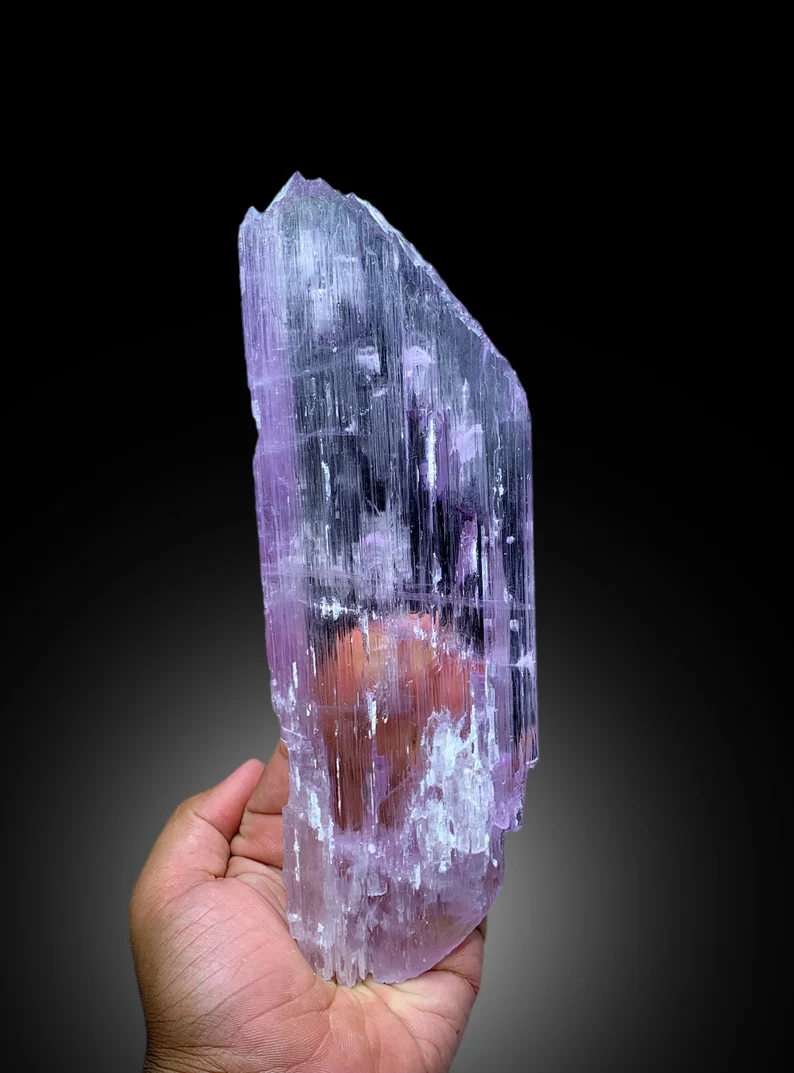
Kunzite can range from very pale pink to stronger pink, lilac, violet, and occasionally nearly colorless varieties. Some specimens display a beautiful combination of pink and purple tones.
One of its most notable characteristics is its strong pleochroism. Depending on the direction from which the gemstone is viewed, the color can appear different in intensity.
This optical property makes cutting Kunzite particularly important. Experienced gem cutters carefully orient the crystal to display the most attractive color when the gemstone is viewed from the top.
History of Kunzite
Kunzite was first discovered in the early twentieth century. The gemstone was named after George Frederick Kunz, a famous American mineralogist and gem expert who played an important role in the study and promotion of gemstones.
The discovery and identification of Kunzite helped bring attention to the gemstone world of spodumene. Although spodumene itself had been known earlier, the attractive pink variety became recognized as a distinct gemstone material.
George Frederick Kunz was associated with several important developments in American gemology. Naming the gemstone Kunzite was a recognition of his contributions to mineralogy and gem science.
Since its introduction to the gemstone market, Kunzite has become appreciated for its large crystals, attractive transparency, and pastel colors.
Kunzite Stone Meaning
Kunzite is often associated with gentle beauty and emotional symbolism. Its pink and lilac colors have contributed to its popular connection with ideas such as affection, calmness, compassion, and positivity.
In jewelry and gemstone traditions, Kunzite is sometimes described using symbolic meanings such as:
- Love
- Compassion
- Peace
- Emotional balance
- Calmness
- Positivity
- Gentle energy
- Inner harmony
These meanings are cultural and traditional associations rather than scientifically proven effects. The scientific value of Kunzite comes from its mineral composition, crystal structure, optical properties, durability, and geological formation.
For people who enjoy gemstones for their symbolism, however, these traditional associations can add personal meaning to a Kunzite necklace, ring, bracelet, or pendant.
Kunzite Colors
Color is one of the most attractive characteristics of Kunzite.
The gemstone can occur in several shades, including:
Pink Kunzite
Pink Kunzite is one of the most popular varieties. It may range from extremely pale pink to a more noticeable rose or pinkish-purple shade.
Its soft appearance makes it particularly attractive in elegant jewelry designs.
Lilac Kunzite
Lilac Kunzite has a delicate purple-pink appearance. This color is highly desirable among collectors because of its distinctive pastel character.
Violet Kunzite
Some Kunzite specimens display stronger violet or purple tones. These stones can be particularly attractive when they have good transparency and strong color.
Colorless Kunzite
Very pale or nearly colorless spodumene may also occur. However, colorful Kunzite is generally more recognizable and desirable in the gemstone market.
Why Does Kunzite Change Color?
Kunzite’s color can appear different depending on viewing direction because of pleochroism.
Pleochroism is an optical phenomenon in which a gemstone displays different colors or color intensities when viewed along different crystallographic directions.
In Kunzite, this can create subtle differences between pink, lilac, and violet tones.
Gem cutters therefore pay close attention to crystal orientation. Cutting the stone in the correct direction can help display its most attractive color.
This is one reason why Kunzite is interesting not only to jewelry lovers but also to gemologists and mineral collectors.
Physical Properties of Kunzite
Kunzite has several physical and optical properties that help gemologists identify it.
Chemical Composition
Kunzite is a variety of spodumene with the chemical composition:
LiAlSi₂O₆
Lithium is an important component of its mineral structure.
Crystal System
Kunzite belongs to the monoclinic crystal system.
Its crystals can form in elongated shapes, sometimes producing impressive specimens.
Hardness
Kunzite has a Mohs hardness of approximately 6.5 to 7.
This means it has reasonable durability for jewelry, although it is not as hard as diamond or sapphire.
Transparency
Kunzite can range from transparent to translucent, with transparent material being particularly desirable for faceted gemstones.
Luster
Its luster is generally described as vitreous, giving polished Kunzite a glass-like appearance.
Cleavage
Kunzite has distinct cleavage. This is an important consideration when cutting, setting, cleaning, and wearing the gemstone.
A gemstone with prominent cleavage can be more vulnerable to damage from sharp impacts.
How Is Kunzite Formed?
Kunzite forms through geological processes associated with lithium-rich environments.
It is a variety of spodumene and is commonly associated with pegmatites. Pegmatites are coarse-grained igneous rocks that can contain large crystals of minerals.
During the cooling of mineral-rich molten material, elements such as lithium can become concentrated. Under suitable conditions, spodumene crystals can grow.
Some pegmatites provide enough space and suitable chemical conditions for crystals to become exceptionally large.
This is one reason Kunzite and other spodumene varieties can occur in impressive crystal sizes.
Where Is Kunzite Found?
Kunzite has been discovered in several parts of the world.
Important sources and localities associated with Kunzite and gem-quality spodumene include:
- Brazil
- Afghanistan
- Madagascar
- Pakistan
- United States
- Mozambique
- Myanmar
- Other lithium-rich pegmatite regions
Brazil has historically been an important source of gem-quality spodumene varieties.
Afghanistan and Pakistan are also known for attractive pegmatite minerals and gemstones.
The exact quality, color, transparency, and size of Kunzite can vary considerably from one locality to another.
Kunzite in Pakistan
Pakistan is famous for producing a variety of attractive minerals and gemstones. The country’s mountainous regions contain numerous mineral-rich geological environments.
Gemstone localities in northern Pakistan have produced many interesting minerals, and collectors often pay attention to pegmatite-associated specimens.
When buying Kunzite in Pakistan, it is still important to purchase from a reputable gemstone dealer because mineral specimens and gemstones can vary greatly in quality.
A reliable seller should be able to explain the stone’s identity, treatments, origin when known, and quality characteristics.
Kunzite vs Pink Sapphire
Kunzite and pink sapphire can sometimes look similar, especially when Kunzite has a strong pink color.
However, they are different gemstones.
Pink sapphire belongs to the corundum mineral family, while Kunzite belongs to the spodumene family.
Pink sapphire is also significantly harder. Sapphire has a Mohs hardness of 9, while Kunzite is approximately 6.5 to 7.
This difference is important when selecting jewelry for everyday wear.
Kunzite is often chosen for its large size and delicate pastel appearance, while pink sapphire is prized for its hardness, brilliance, and durability.
Kunzite vs Morganite
Kunzite and morganite can also appear similar.
Morganite is a pink variety of beryl, while Kunzite is a variety of spodumene.
Both can display attractive pink and pastel colors.
Morganite has a hardness of approximately 7.5 to 8, while Kunzite is around 6.5 to 7.
Kunzite can show stronger pleochroism, making its color appear different depending on viewing direction.
The two gemstones can usually be distinguished through proper gemological testing.
Kunzite vs Amethyst
Kunzite and amethyst may overlap in color when Kunzite has a strong violet tone.
However, amethyst is the purple variety of quartz, while Kunzite is spodumene.
Their crystal structures, chemical compositions, hardness, optical properties, and typical appearance differ.
Amethyst is often associated with purple coloration, while Kunzite commonly has a softer pink, lilac, or pinkish-violet appearance.
Kunzite Jewelry
Kunzite is used in many types of jewelry.
Popular choices include:
- Kunzite rings
- Kunzite necklaces
- Kunzite pendants
- Kunzite earrings
- Kunzite bracelets
- Kunzite gemstone sets
Because Kunzite can occur in large transparent crystals, it can make an impressive centerpiece in jewelry.
Its pastel colors also pair well with precious metals such as gold, white gold, and platinum.
Kunzite Rings
Kunzite rings can be elegant and eye-catching.
However, because Kunzite has moderate hardness and noticeable cleavage, rings should be worn with reasonable care.
A ring that is exposed to frequent impacts may have a greater risk of damage than a more durable gemstone such as sapphire.
For this reason, Kunzite rings can be especially suitable for occasional wear or situations where the gemstone is protected by an appropriate setting.
Kunzite Necklaces and Pendants
Necklaces and pendants can be excellent choices for Kunzite.
A pendant generally experiences less direct impact than a ring, making it a practical way to enjoy the gemstone.
Large Kunzite crystals can look particularly impressive as pendant center stones.
Pink and lilac Kunzite can also create a soft and elegant appearance when combined with simple metal designs.
Kunzite Earrings
Kunzite earrings are another popular option.
Earrings usually experience less physical contact than rings, making them suitable for displaying gemstones with moderate durability.
Faceted Kunzite earrings can show attractive brilliance and color.
The gemstone’s pleochroism can also create subtle color changes as the wearer moves.
How Much Is Kunzite Worth?
The value of Kunzite depends on several factors.
Important factors include:
- Color
- Color intensity
- Clarity
- Transparency
- Cut
- Carat weight
- Origin
- Treatment
- Overall appearance
- Market demand
Large Kunzite gemstones are not necessarily expensive simply because they are large. A smaller stone with excellent color, transparency, and cutting can sometimes be more attractive than a larger stone with weak color or visible inclusions.
Color is especially important.
Strong, attractive pink or violet coloration can increase desirability, while very pale stones may generally have lower market appeal.
Does Kunzite Fade?
One of the most important considerations when buying Kunzite is its sensitivity to prolonged exposure to strong light and heat.
Some Kunzite can lose color when exposed to intense or prolonged light, and heat can also be damaging.
Because of this, Kunzite jewelry should be stored carefully and should not be unnecessarily exposed to intense sunlight for extended periods.
This is particularly important for collectors who want to preserve the original color of a gemstone.
How to Clean Kunzite
Kunzite should be cleaned gently.
A safe general approach is:
- Use lukewarm water.
- Add a small amount of mild soap.
- Use a soft cloth or very soft brush.
- Gently clean the gemstone.
- Rinse carefully.
- Dry with a soft cloth.
Avoid exposing Kunzite to harsh chemicals, extreme temperatures, or sudden temperature changes.
Ultrasonic cleaners and steam cleaners may not be appropriate because of Kunzite’s cleavage and potential sensitivity.
When in doubt, professional jewelry cleaning is the safest option.
How to Store Kunzite
Proper storage can help protect Kunzite from scratches and accidental impacts.
It is best to:
- Store Kunzite separately from harder gemstones.
- Use a soft jewelry pouch.
- Keep jewelry in a padded compartment.
- Avoid placing heavy objects on top of Kunzite jewelry.
- Keep it away from prolonged direct sunlight.
- Protect it from sudden temperature changes.
Because gemstones such as diamond and sapphire are harder than Kunzite, storing them together can result in scratches.
How to Identify Genuine Kunzite
Identifying a gemstone accurately can require professional gemological testing.
Some useful characteristics of Kunzite include:
- Pink to lilac coloration
- Strong pleochroism
- Transparent to translucent appearance
- Vitreous luster
- Monoclinic crystal structure
- Mohs hardness around 6.5–7
- Characteristic spodumene properties
Visual inspection alone may not always be enough.
If a Kunzite is valuable, a professional gemologist or recognized gemological laboratory can help verify its identity and disclose relevant treatments.
Kunzite Treatments
Gemstones can sometimes undergo treatments to improve their appearance.
Kunzite may be treated in certain circumstances, and sellers should disclose known treatments when selling treated material.
Heat and irradiation are among treatments that can be relevant to colored gemstones generally, although treatment practices and stability can vary.
When buying an expensive Kunzite, ask the seller:
- Is the stone natural?
- Has it been treated?
- Is the color stable?
- What is the stone’s origin?
- Is there a laboratory report?
- What are the stone’s dimensions and weight?
Transparent information makes it easier to make an informed purchase.
How to Buy Kunzite Stone
Buying a gemstone requires careful attention to quality.
Choose Attractive Color
Look for a color that appears pleasing and consistent.
Pink, lilac, and violet tones can all be attractive.
Check Transparency
Good transparency can make a faceted Kunzite appear bright and lively.
Examine the Cut
A well-cut gemstone should have good symmetry and attractive brilliance.
Inspect for Damage
Check the stone carefully for chips, cracks, or other damage.
Ask About Treatment
Always ask whether the gemstone has been treated.
Compare Prices
Do not buy the first stone you see. Compare several examples to understand the market better.
Buy From Reputable Sellers
A trustworthy gemstone dealer should provide clear information about the stone.
Kunzite for Collectors
Kunzite is highly interesting to mineral collectors because of its crystal forms and large specimens.
Collectors may seek:
- Large Kunzite crystals
- Well-formed crystals
- Strongly colored specimens
- Transparent crystals
- Specimens from famous localities
- Rare crystal formations
A collector specimen does not necessarily need to be faceted.
Natural crystals can be valuable for their geological beauty and scientific interest.
Kunzite Crystal Specimens
Natural Kunzite crystals can have an impressive appearance.
They may form as elongated prismatic crystals with attractive pink or lilac colors.
Large specimens can become important additions to mineral collections.
Collectors often examine the crystal’s:
- Color
- Size
- Transparency
- Crystal shape
- Surface quality
- Locality
- Natural condition
Well-preserved specimens can be particularly desirable.
Symbolic and Traditional Uses of Kunzite
Kunzite has been given various symbolic meanings in modern crystal traditions.
It is commonly associated with:
- Love
- Kindness
- Peace
- Emotional calm
- Compassion
- Positive thinking
- Harmony
These are traditional or spiritual interpretations and should not be confused with scientific evidence.
There is no reliable scientific evidence that wearing Kunzite can treat diseases or produce specific medical effects.
People may still enjoy its symbolism as part of personal, cultural, or decorative practices.
Is Kunzite a Birthstone?
Kunzite is not one of the universally recognized traditional birthstones used for the standard calendar months.
However, some modern jewelry and gemstone traditions associate Kunzite with particular months or occasions.
Because birthstone lists can differ between organizations and cultures, buyers should check the specific tradition being followed.
Kunzite and Modern Fashion
Kunzite has become attractive to modern jewelry designers because of its pastel appearance.
Soft pink and lilac gemstones work particularly well with minimalist jewelry.
A large Kunzite center stone can create a dramatic statement piece, while smaller stones can be used for delicate everyday-inspired designs.
Its colors can complement:
- White gold
- Yellow gold
- Rose gold
- Platinum
- Silver
The choice of metal can change the overall appearance of the gemstone.
Why Is Kunzite Popular?
Several characteristics contribute to Kunzite’s popularity.
Attractive Color
Its pink and lilac colors are elegant and distinctive.
Large Crystals
Kunzite can occur in very large crystals, making large gemstones possible.
Pleochroism
Color variation from different viewing directions adds visual interest.
Transparency
Fine transparent material can produce attractive faceted gemstones.
Unique Character
Kunzite looks different from many traditional pink gemstones.
Advantages of Kunzite
Some major advantages include:
- Beautiful pastel colors
- Can occur in large sizes
- Attractive transparency
- Strong pleochroism
- Suitable for many jewelry designs
- Interesting geological history
- Popular with mineral collectors
- Distinctive appearance
Disadvantages of Kunzite
Kunzite also has some limitations.
- It is not extremely hard.
- It has cleavage.
- It can be vulnerable to strong impacts.
- Some material can fade with prolonged strong light exposure.
- It requires careful cleaning.
- It may not be ideal for heavy everyday wear.
Understanding these characteristics helps buyers choose the right type of jewelry.
Is Kunzite Good for Everyday Wear?
Kunzite can be worn regularly, but it requires care.
A pendant or earrings may be more practical for frequent wear than a ring because rings are exposed to more impacts.
If you choose a Kunzite ring, avoid activities where the gemstone may be struck or scratched.
For high-impact activities, removing delicate gemstone jewelry is generally a sensible precaution.
Kunzite Gemstone Cut
Cutting has a major influence on the appearance of Kunzite.
Because the stone is strongly pleochroic, the cutter must consider crystal orientation carefully.
Popular cuts include:
- Oval
- Cushion
- Emerald
- Pear
- Round
- Marquise
- Rectangle
- Custom cuts
The best cut depends on the rough crystal’s color, clarity, shape, and pleochroism.
A skilled cutter attempts to balance color and brilliance while maximizing the usable material.
Kunzite Clarity
Transparent Kunzite is generally attractive because it allows light to travel through the gemstone.
Inclusions may occur naturally.
As with many gemstones, clarity should be evaluated alongside color and overall beauty.
A perfectly clean stone is not always necessary if the gemstone has excellent color and attractive appearance.
For collectors, natural inclusions may also provide information about the gemstone’s geological history.
Kunzite Carat Weight
Kunzite can be found in relatively large sizes compared with many other gemstones.
This makes it particularly appealing to people who enjoy large statement stones.
However, carat weight should not be the only factor considered when evaluating a gemstone.
A gemstone’s value and beauty also depend on:
- Color
- Clarity
- Cut
- Transparency
- Proportions
- Origin
- Treatment
A well-cut smaller stone can sometimes look more attractive than a poorly cut larger stone.
Famous Kunzite Specimens
Large Kunzite crystals have attracted attention from mineral collectors and museums.
Because the mineral can form exceptionally large crystals, some specimens have become notable for their size and quality.
Museum-quality Kunzite specimens are valued not only for jewelry characteristics but also for their geological and mineralogical importance.
Such specimens help demonstrate how minerals can grow under specialized geological conditions.
Kunzite in Gemology
From a gemological perspective, Kunzite is interesting because it combines several notable characteristics.
Its spodumene composition, monoclinic crystal structure, pleochroism, cleavage, hardness, and color range provide useful identification clues.
Professional gemologists may use instruments and laboratory tests to distinguish Kunzite from visually similar gemstones.
When a gemstone has significant financial value, laboratory identification is preferable to relying only on appearance.
Common Myths About Kunzite
There are many claims about gemstones on the internet.
Some websites claim that Kunzite can cure physical illnesses or provide guaranteed emotional results.
Such claims are not scientifically established.
Kunzite should be appreciated primarily as a natural mineral and gemstone. Its traditional symbolic meanings can be meaningful to individuals, but they should not replace professional medical advice or evidence-based treatment.
Frequently Asked Questions About Kunzite
What is Kunzite stone?
Kunzite is a pink-to-lilac gemstone variety of spodumene, a lithium aluminum silicate mineral.
What color is Kunzite?
Kunzite is commonly pink, lilac, violet, or very pale and nearly colorless.
Is Kunzite a real gemstone?
Yes. Kunzite is a natural gemstone variety of spodumene.
Is Kunzite expensive?
Its price varies depending on color, clarity, cut, size, transparency, treatment, and market demand.
Is Kunzite durable?
Kunzite has a Mohs hardness of about 6.5–7 but has cleavage, so it should be handled carefully.
Can Kunzite be worn every day?
It can be worn regularly with care, but it is more vulnerable to impact than harder gemstones such as sapphire.
Does Kunzite fade?
Some Kunzite can lose color with prolonged exposure to strong light, so careful storage and handling are recommended.
Can Kunzite go in water?
Brief contact with ordinary water during gentle cleaning is generally acceptable, but harsh chemicals, extreme temperatures, and sudden temperature changes should be avoided.
How should Kunzite be cleaned?
Use lukewarm water, mild soap, and a soft cloth or soft brush. Avoid harsh cleaning methods.
Is Kunzite the same as pink sapphire?
No. Kunzite is spodumene, while pink sapphire is corundum.
Is Kunzite the same as morganite?
No. Morganite is a variety of beryl, while Kunzite is a variety of spodumene.
Where is Kunzite found?
Kunzite and gem-quality spodumene occur in several countries, including Brazil, Afghanistan, Pakistan, Madagascar, Mozambique, and the United States.
Why is Kunzite pink?
Pink and lilac coloration in Kunzite is associated primarily with trace manganese in its crystal structure.
Does Kunzite have pleochroism?
Yes. Strong pleochroism is one of Kunzite’s important optical characteristics.
Is Kunzite good for rings?
It can be used for rings, but because of its cleavage and moderate hardness, protective settings and careful wear are recommended.
Final Thoughts on Kunzite Stone
Kunzite is a remarkable gemstone that combines beautiful pastel colors, impressive transparency, interesting optical properties, and fascinating geological origins. Its pink, lilac, and violet shades make it particularly attractive for jewelry, while its large natural crystals make it an interesting mineral for collectors.
The gemstone’s pleochroism gives it a unique visual character, and its connection with the spodumene mineral family makes it scientifically interesting as well.
When purchasing Kunzite, buyers should pay attention to color, clarity, transparency, cut, size, treatment, and overall condition. Because the gemstone has cleavage and can be sensitive to prolonged strong light exposure, proper care is important.
Whether you are interested in Kunzite because of its beauty, geology, jewelry potential, or traditional symbolism, it is a gemstone with a distinctive identity and fascinating story.
For jewelry lovers looking for a soft pink or lilac gemstone, Kunzite can be an elegant choice. For mineral collectors, large natural crystals can offer a completely different kind of appeal.
Ultimately, the best Kunzite is one that combines attractive color, good transparency, quality cutting, and a condition appropriate for the way you intend to use it.
SEO Keywords
Primary Keyword: Kunzite Stone
Secondary Keywords:
- Kunzite gemstone
- Kunzite stone meaning
- Kunzite properties
- Kunzite color
- Kunzite benefits
- Kunzite jewelry
- Kunzite price
- Kunzite value
- Pink Kunzite
- Lilac Kunzite
- Kunzite crystal
- Natural Kunzite
- Kunzite gemstone meaning
- Kunzite stone benefits
- Kunzite ring
- Kunzite necklace
- Kunzite pendant
- Kunzite earrings
- Kunzite birthstone
- Kunzite vs pink sapphire
Suggested SEO Title
Kunzite Stone: Meaning, Properties, Colors, Benefits, Price & Jewelry Guide
Suggested Meta Description
Discover Kunzite Stone, including its meaning, colors, properties, value, history, origins, jewelry uses, benefits, care tips, and how to identify genuine Kunzite.
Suggested URL Slug
/kunzite-stone/
Suggested Image Alt Text
Natural pink Kunzite stone gemstone
Conclusion
Kunzite is a beautiful and distinctive gemstone known for its soft pink, lilac, and violet colors. As a variety of spodumene, it offers an interesting combination of geological significance and visual beauty. With proper care, Kunzite jewelry and specimens can remain attractive for many years, making this gemstone a fascinating choice for collectors and jewelry enthusiasts alike.